Ministries
Resources
Director's Introduction
What is the MTIOPC?
Admission
Course Offerings
Course Logistics
Course Descriptions
Sequence of Course Offerings
Policies
Expenses
Personnel
Testimonials
The Sixty-fifth General Assembly (1998) approved a plan for the Subcommittee on Ministerial Training (SMT) of the Committee on Christian Education to establish a Ministerial Training Institute of the Orthodox Presbyterian Church (MTIOPC). The SMT stated that the purpose of the MTIOPC was to assist in maintaining and enhancing the quality of ministerial service in the Orthodox Presbyterian Church, especially pastoral and missionary, by helping men to prepare for informed and effective ministry that conforms to the standard of Holy Scripture. To this end, the Institute shall advance a constructive view of the Orthodox Presbyterian Church and its doctrine, government, discipline, and worship.
Since the establishment of the MTIOPC in 1998 with this stated purpose in mind, ten different courses of instruction, taught by experienced OP pastors and elders, have been offered. Over 570 pastors, elders, licentiates, and men under care have been enrolled in MTIOPC courses. Intensive training sessions have been held in California, Florida, Illinois, Michigan, New York, Ohio, Pennsylvania, Virginia and Washington.
The SMT's desire is to continue to develop this vital ministry of the Orthodox Presbyterian Church. This Catalog provides important information for those interested in enrolling in the MTIOPC course of instruction.
Sincerely in Christ,
Danny E. Olinger
Director of the MTIOPC
CCE General Secretary
An Institute, Not a Seminary
The MTIOPC is an institute, not a seminary. It does not come close to offering a full seminary curriculum. Our goal is to offer instruction in five key areas: (1) the Westminster standards, (2) Presbyterian church polity, particularly as embodied in the OPC, (3) the history, character, and distinguishing characteristics of the OPC, (4) practical theology, and (5) presuppositional apologetics. Some seminaries do an acceptable job of teaching some of these subjects that are essential for preparing men for effective, biblical ministry in the OPC, but we believe that no one seminary covers all of them well.
An Institute, Not a Location
The MTIOPC does not have a campus. It serves men who are preparing for, or are currently in, ministry across the whole country.
A Church Institute, Not a Parachurch Organization
The Institute is answerable to the Orthodox Presbyterian Church through the General Assembly and its Committee on Christian Education (CCE). The Assembly can direct the Institute to take certain actions or to refrain from others. The six members of the CCE's Subcommittee on Ministerial Training (SMT), which serves as the Institute's board of directors, are elected directly by the Assembly. The SMT is responsible for appointing a director, an administrator, and the teachers of the Institute.
Presbyterian, Not Hierarchical
In the OPC, as in Presbyterianism generally, the presbytery is the church judicatory that is primarily responsible for the admission of men into the gospel ministry. The presbytery takes men under care, examines men for licensure and ordination, oversees a minister's life and doctrine, and is the court of original jurisdiction over him. We by no means intend to weaken these roles of the presbyteries. Rather, we want the Institute to strengthen them. We hope that presbyteries will interact with the Institute and will encourage their men under care to take advantage of it.
Where Is the Institute Going?
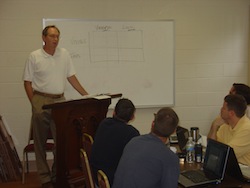
Troxel teaching
• An OPC Identity, Not Isolationism.
As we offer instruction to ministerial candidates, there is a danger of becoming ingrown. That would be contrary to the Reformed ecumenical spirit and history of the OPC. The distinguishing commitments of the OPC are not a parochial possession, but are fundamental to the struggles of the whole church of Jesus Christ in the contemporary world. Preserving a knowledge of our history and of its relevance to today's ecclesiastical scene will be a service not only to the OPC but also to the whole body of Christ.
• Scholar-Preachers, Not Shallow Preachers.
Presbyterianism envisions that her preachers should also be scholars. Her scholar-preachers should be equipped to open the treasures of the Word of God to the people of God. The instruction offered in the MTIOPC should therefore not be "safe." We should not try to keep our ministerial candidates from being exposed to ideas that are foreign to our church and confession. Rather, we should want them to be exposed to the alternatives, and to be prepared to teach and defend our confession and polity from the Word of God. This means that the Institute's level of instruction must equal or even exceed that of seminary training.
• Pastors, Not Hired Men
But scholarship and education are not ends in themselves. The Institute must also prepare men to love and serve the OPC as pastors, shepherding the flock of God. Like Christ, they must be prepared to lay down their lives for the flock. Another part of OPC history worth remembering—and we trust that it is cherished in heaven—is the many sacrifices made by our early ministers and missionaries. Some of them lived from hand to mouth, enduring a voluntary poverty and exile in order to minister in the OPC. They went out without knowing whither they went, having been privileged not only to believe in Christ but also to suffer for him. It is our hope that the teachers in the Institute will model that kind of spirit to their students.
• A Journey, Not a Destination
The Institute will not be a resting place. It is an experiment in ministerial training. Over the next few years, the SMT will learn much about offering instruction to ministerial candidates. We will learn more precisely what they need and whether we can help them effectively. And through our seminary visitation program, we will learn more about the strengths and weaknesses of the seminaries.
—James S. Gidley
Dr. Gidley is a ruling elder at Grace OPC in Sewickley, Pa., a member of the Committee on Christian Education, and chairman of the Subcommittee on Ministerial Training.
Men who are under care, licentiates, ministers, and elders of the Orthodox Presbyterian Church may apply for admission to the MTIOPC. Ministers and men in training for the ministry from other ecclesiastical bodies also may apply to the MTIOPC. The Disability and the Church course also admits deacons, as well as OPC members who serve in the Christian Education and Sunday school ministries of their congregation and are not ordained. Their session must send a written recommendation to MTIOPC Director Danny Olinger. For further information contact:
Mrs. Judy Alexander
alexander.1@opc.org
The MTIOPC offers a core set of courses that focuses on the determined needs of the Orthodox Presbyterian Church. The MTIOPC does not offer degrees. Rather, a student may take any or all of the courses offered by the MTIOPC. It is recommended that men seek the counsel of their local session and presbytery in determining which courses might be most helpful to their ministry.
MTIOPC courses are designed to equal or exceed seminary-level courses. As such, they will be academically rigorous and require considerable effort on the part of the student.
The MTIOPC offers courses through a combination of Internet and face-to-face interaction. At the start of the semester, students will be sent a syllabus outlining the purpose and goals of the course, required and recommended readings, and assignments. During the semester, faculty and students will correspond via email. Completed assignments will be sent to faculty by email, and faculty will respond by email. In some classes, instructors may hold Zoom meetings or conference calls with their students or email videos for the students to view.
At the end of the semester there will be a mandatory intensive training session, held in a predetermined location. It will provide an opportunity for students and faculty to meet face-to-face for discussion, testing (where appropriate), and to bring closure to the course. Attendance is required.
As an offshoot of the Coronavirus, MTIOPC offers some online courses, with hour-long online weekly classes throughout the term, culminating in two-hours a day of online sessions for two days during Intensive Training.
The intensive training sessions for the spring 2025 term will be held in Charlotte, NC, May 13-15, 2025.
The MTIOPC courses and their credits are:
Book of Discipline (1 credit)
The purpose of this course is to encourage Christ’s undershepherds in their loving exercise of biblical church discipline, as they seek to carry out faithfully the duties and responsibilities enumerated in the Book of Discipline of the Orthodox Presbyterian Church. Jurisdiction, charges, process, review, and censure are covered in detail. Some applied exercises in the area of church discipline are used to help students think through the challenges faced in this difficult area of ministry.
Defending the Faith (Presuppositional Apologetics) (2 credits)
The purpose of this course is to provide a thorough introduction to presuppositional apologetics, and to highlight its importance in the theological encyclopedia and the life of the church. The first half of the course is an introduction to presuppositional apologetics. Topics include the history of apologetics, the nature of presuppositional apologetics, and the relationship between presuppositional apologetics and Scripture, the person of God, preredemptive revelation, the doctrine of the Fall, the covenant of grace—Jesus Christ, and the doctrine of the church.
The second half of the course deals with presuppositional apologetics and the marketplace. Topics include Cornelius Van Til and the theistic proofs for God's existence, the problem of evil, criticisms of miracles from a scientific worldview, religious-mystical experience, psychology, and postmodernism. The course concludes with a discussion of why presuppositional apologetics is so important to the future of the Orthodox Presbyterian Church.
Disability and the Church (1 credit)
This course is designed to give an introduction to disability and the church to OP pastors, licentiates, men under care, ruling elders, deacons, and non-ordained OPC members who serve in their congregation’s Christian Education or Sunday school ministries. The course seeks to help them to think biblically and practically about disability from a reformed perspective. This class will emphasize that every person bears God’s image, suffers from the effects of the fall into sin, needs the Savior, and will have a resurrected body in an eternal state. Assigned readings will review the major theological themes of creation, the fall, providence, salvation, the church, and the resurrection. These will serve as a foundation for practical application during intensive training:
Ecclesiology (2 credits)
The purpose of this course is to acquaint students with the biblical and historical foundations of Presbyterian church government and the consequent principles and practice by which the body of Christ should be understood and shepherded. A well-informed and biblical ecclesiology equips a minister with competency for his conduct in the church, and it prepares him for the theological challenges and controversies which often confront him in the area of ecclesiology.
Furthermore, those who have Reformed convictions about the church are increasingly challenged by the modern Zeitgeist of American evangelicalism and its thorough saturation with the parachurch agenda. Orthodox Presbyterian ministers and elders who live in such an age must be prepared to articulate the conviction that "there is no ordinary possibility of salvation" outside of the visible church (WCF 25.2). And they must give a thoughtful and winsome defense of the church's rightful claim to ordain "stewards of the mysteries of God" (1 Cor. 4:1) and to exercise the "keys of the kingdom" (Matt. 16:19) as the "pillar and foundation of the truth" (1 Tim. 3:15).
The Form of Government (2 credits)
The Form of Government course will focus on the meaning, history, and polity of the Orthodox Presbyterian Church; the nature and exercise of church government; the officers of the church; the governing assemblies and local administration; the process of licensing, ordaining, and calling ministers and other ordained officers; ways to amend the constitution; and Robert’s Rules of Order.
A Greek Refresher (2 credits)
This course seeks to aid pastors in refreshing and expanding their grasp of Greek so they are strengthened in their presentation of the whole counsel of God. Returning to the study of the biblical languages is the best source of sound exegesis and preaching.
The course will renew and expand one’s basic skill with Koine Greek syntax and vocabulary, improve proficiency in sight-reading Koine Greek, and recall the main theological and exegetical themes of various New Testament authors and their relation to the Reformed confessions. The instructor will meet via video-conference with students weekly. Students may expect to spend about 30–45 minutes on each of the two or three short weekly assignments before attending the three-day summative workshop at the Intensive Training.
A Hebrew Refresher (2 credits)
This course is intended for ministers and licentiates who have been trained in Hebrew to refresh and deepen their knowledge of the basics of Hebrew grammar, syntax, and vocabulary. Even those who are quite rusty in their Hebrew are welcome to take the class. The student will gain experience and confidence in reading Old Testament Hebrew, especially prose, and understand how to use these skills in preparing to preach and teach God’s Word.
This course will focus on review and reading. Students will be expected to parse and define words and translate verses. The class will meet weekly on Skype before Intensive Training.
Homiletics (2 credits)
The purpose of the Homiletics course is to serve as a practicum that will supplement standard seminary homiletics programs. The practicum will provide instruction, discussion, models, and experience in preaching that is both pastoral and sensitive to the standards of preaching that have historically marked Presbyterian and Reformed churches. Special attention will be given to these standards as presented in the Orthodox Presbyterian Church's Form of Government and Directory for the Public Worship of God. The course will offer the equivalent of a two-semester seminary homiletics class in a combination of preparatory work, an intensive training program, and follow-up. Preference will be given to pastors and licentiates.
OPC History (1 credit)
The course examines the history, character, and distinguishing commitments of the Orthodox Presbyterian Church. The first part of the course will explore the historical setting of the church through a survey of American Presbyterianism from colonial times to 1936 and the events surrounding the formation of the OPC. The class will then study the emerging ethos of the OPC as it has been shaped by the struggles it has experienced. Attention will also be given to the church's relationship with American evangelicalism and those churches with which the OPC stands in ecclesiastical fellowship. Through the process of reviewing different interpretations of OPC history, students will be expected to articulate and defend their understanding of the identity of the OPC.
Pastoral Theology (2 credits)
The purpose of this course is to acquaint students with the biblical and historical foundations of Presbyterian church government and the consequent principles and practice by which the body of Christ should be understood and shepherded. A well-informed and biblical ecclesiology equips a minister with competency for his conduct in the church, and it prepares him for the theological challenges and controversies which often confront him in the area of ecclesiology.
Furthermore, those who have Reformed convictions about the church are increasingly challenged by the modern Zeitgeist of American evangelicalism and its thorough saturation with the parachurch agenda. Orthodox Presbyterian ministers and elders who live in such an age must be prepared to articulate the conviction that "there is no ordinary possibility of salvation" outside of the visible church (WCF 25.2). And they must give a thoughtful and winsome defense of the church's rightful claim to ordain "stewards of the mysteries of God" (1 Cor. 4:1) and to exercise the "keys of the kingdom" (Matt. 16:19) as the "pillar and foundation of the truth" (1 Tim. 3:15).
Reformed Evangelism (2 credits)
This course seeks to explore the principles and practices of doing evangelism from a Reformed theological perspective for the sake of building up the body of Christ both spiritually and numerically. Course lectures will provide biblical, theological, historical, and practical reflections on the subject of evangelism. Evangelistic exercises and assignments will encourage students to put that content into practice.
Students should learn to articulate a biblical theology of evangelism, emphasize the priority of preaching and the role of the Holy Spirit, describe the evangelistic thought and practices of Reformers, distinguish the roles of the ordained and laity in evangelism, and prayerfully consider ways to help their own churches in evangelism. The goal is to enable students to move from the theory to the practice of evangelism in ways which are consistently reformed and practically effective.
Reformed Worship (1 credit)
This course introduces the biblical, theological, and historical roots of Presbyterian worship. The primary aim of the course is to equip students to plan and lead worship services that are in accordance with Holy Scripture and the subordinate standards of the Orthodox Presbyterian Church. Topics include the regulative principle of worship, the Christian Sabbath (the Lord’s Day), the reading and preaching of Scripture, the sacraments, psalmody, hymnody, corporate prayer, benedictions, the order of worship, and the architectural setting of worship.
The Westminster Standards (2 credits)
The purpose of this course is to enable the student to get a clear understanding of the rich heritage of the Reformation faith. The course offers a detailed analysis of the contents of the Westminster Confession of Faith (WCF). The relationship between the WCF and the Larger and Shorter Catechisms is discussed. The goal is for the student to know the system of doctrine formulated in the WCF and the two catechisms, and to be able to subscribe to these standards with integrity. The method used includes reading of assigned materials, review of specific commentaries on these standards, and study of a detailed syllabus that reduces the doctrines of the Confession to a series of clear propositions. Special attention will be given to the OPC's form of subscription to the Westminster standards.
(Intensive Training in Charlotte, NC, May 13-15, 2025)
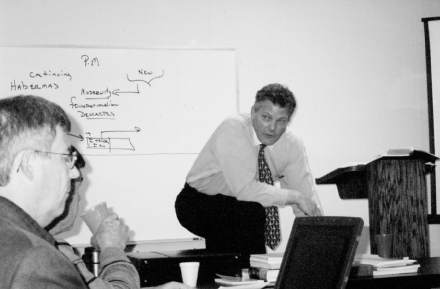
Dennison teaching
Pass/Fail
Students will receive pass/fail grades at the completion of their coursework. Seminary credit will not be available.
Complete/Incomplete
The Standard of completion is the fulfillment of all syllabus requirements and attendance at the Intensive Training sessions. The student has until the end of the next semester to complete this course. A student with an incomplete grade will not have his $50 or $100 registration fee returned until he has completed the course.
Withdrawal
A student wanting to withdraw from a course must do so before the end of the second month of the semester. A withdrawal will not be accepted after that date. To withdraw, a student must complete a withdrawal form and submit the form to the Administrator. The form is available from Judy Alexander at alexander.1@opc.org. A withdrawal carries with it the forfeit of the $50 or $100 registration fee, whichever applies to the student.
Attendance at the Intensive Training Session
Because the intensive training session is an integral part of the course, attendance is required. Students who do not attend the session, whether it is held in person or online, will receive an incomplete for the course. They will forfeit the $50 or $100 registration fee, whichever applies to the student.
The MTIOPC provides tuition-free courses for men under care of a presbytery, licentiates, and pastors in the Orthodox Presbyterian Church. Tuition for elders in the Orthodox Presbyterian Church is $50 per course. Tuition for ministers serving outside of the Orthodox Presbyterian Church is $100 per course. Tuition is free for all students who attend the Disability and the Church course.
All students are required to pay a $50 per course registration fee. This registration fee is refunded upon successful completion of the course.
Students are required to purchase certain texts and materials for courses. Except for those materials provided free of charge by the Orthodox Presbyterian Church to men under care, students must assume the cost of class materials.
MTIOPC will provide all students with food, housing, and transportation to and from class and the airport during the intensive training week. Other travel arrangements for the intensive training week are the student's responsibility. Students who are OPC ministers, licentiates, or men under care may apply for a travel scholarship to defray some of the cost of travel.
Danny Olinger
Members of the Subcommittee on Ministerial Training:
Director: Rev. Danny E. Olinger
Coordinator: Mrs. Judy Alexander
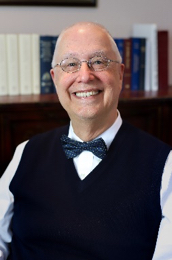 |
Mark T. Bube Education: Stanford University, B.A.; University of San Francisco School of Law, J.D. Ordination: Ruling elder at First OPC in Portland, Ore., 1983 Present position: Retired General secretary for the Committee on Foreign Missions of the OPC |
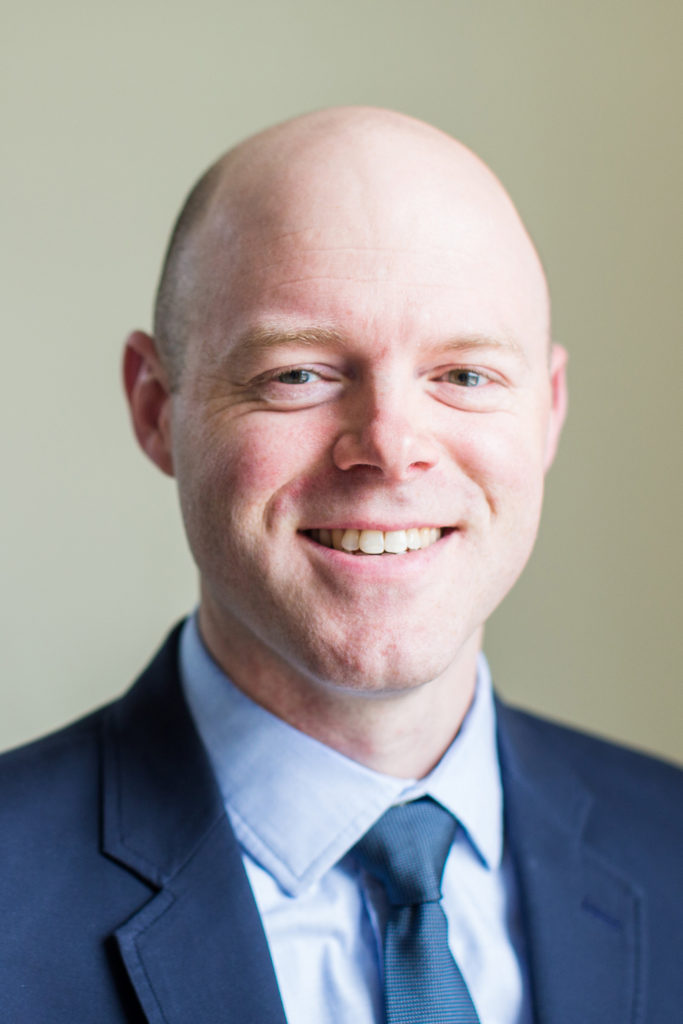 |
Camden M. Bucey Education: Bradley University, Peoria, Illinois, B.S., M.B.A; Westminster Theological Seminary, M.Div., Ph.D. Ordination: Presbytery of the Midwest, OPC, 2013 Present position: Executive Director, Reformed Forum; Evangelist, Hope OPC, Grayslake, Illinois; historian of the OPC |
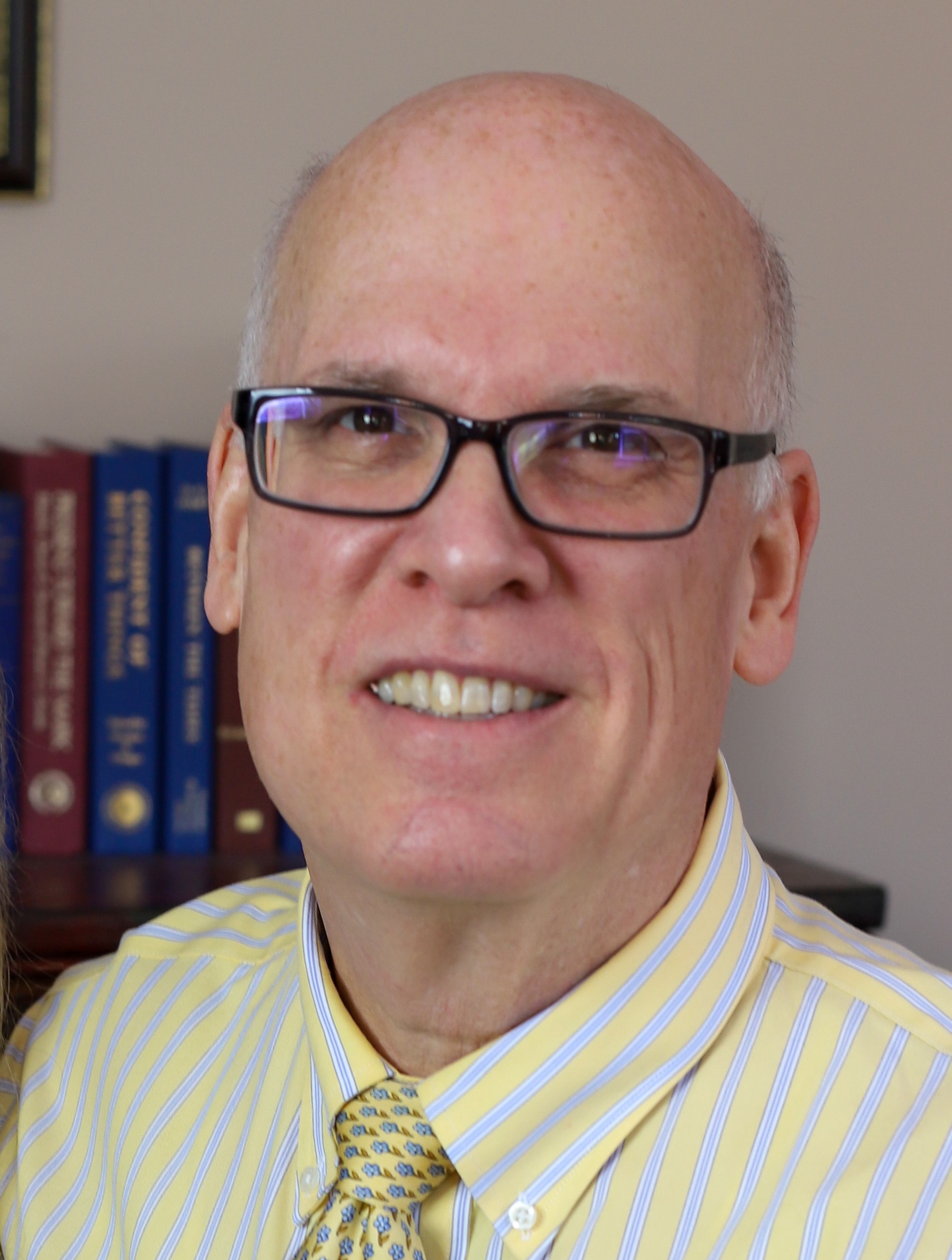 |
Douglas B. Clawson Education: Westminster College, B.A.; Westminster Theological Seminary, M. Div. Ordination: Presbytery of Ohio, OPC, 1984 Present position: General Secretary, Committee on Foreign Missions |
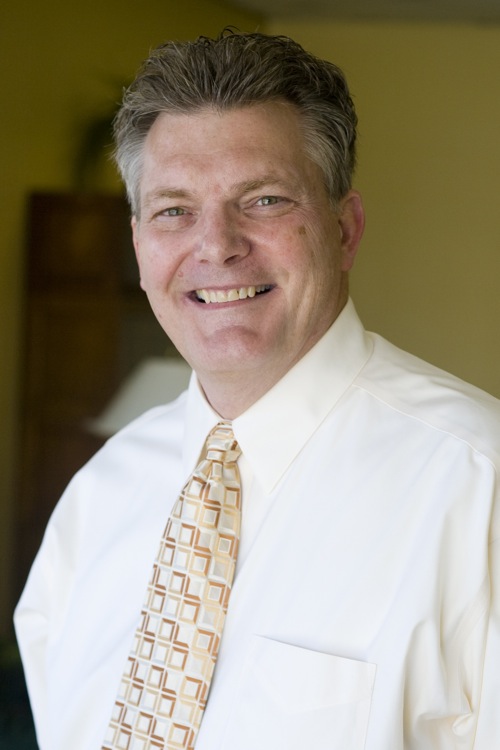 |
William D. Dennison Education: Geneva College, B.A.; Westminster Theological Seminary, M.Div., Th.M.; Michigan State University, Ph.D. Ordination: Presbytery of the South, OPC, 1995 Present position: Pastor of Immanuel OPC in Kent, WA; Emeritus Professor of Interdisciplinary Studies at Covenant College |
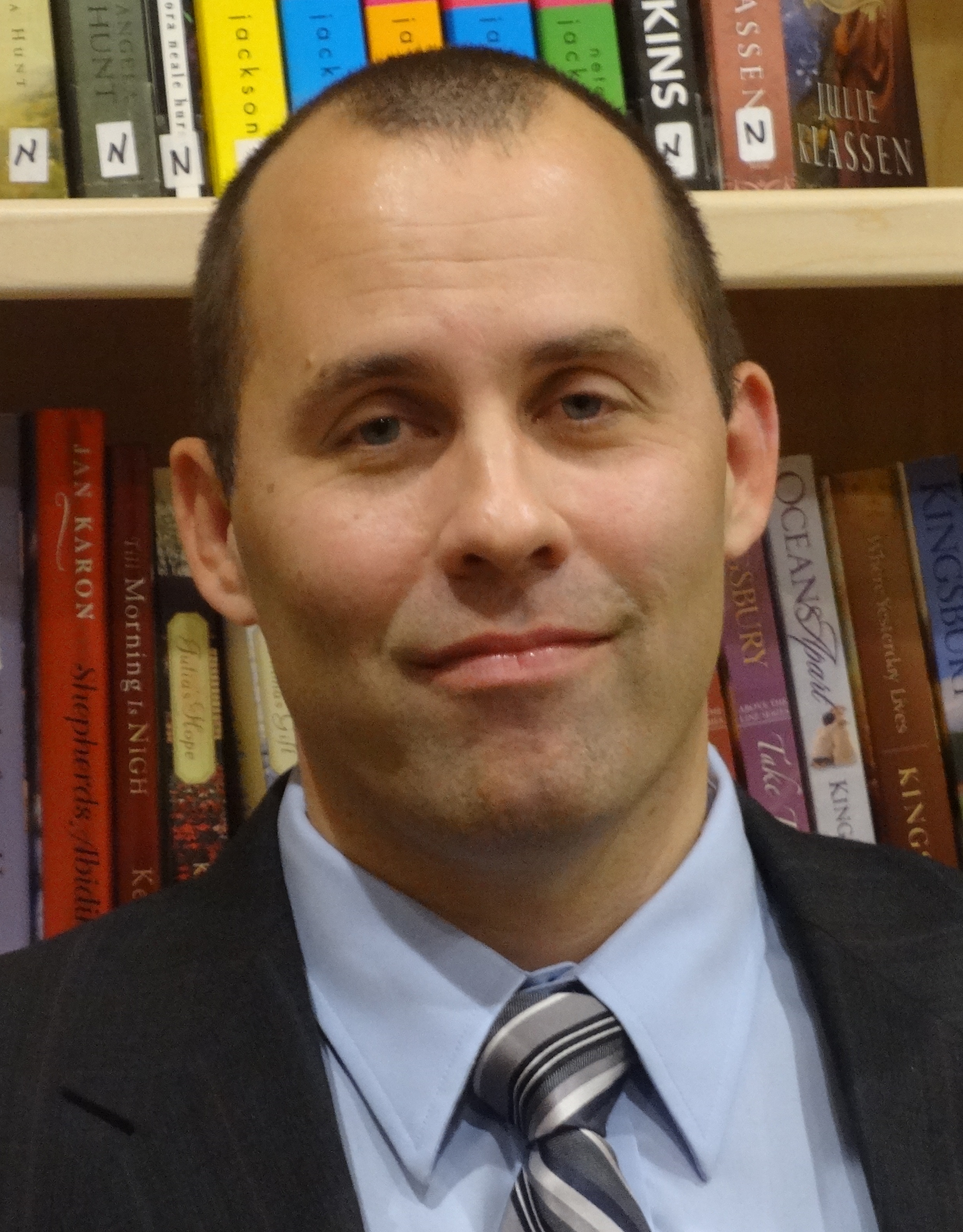 |
David C. Noe Education: Calvin College, B.A., Philosophy and Classics; University of Iowa, Ph.D., Classics Ordination: Teacher of the Word, Reformation OPC, Grand Rapids, Mich., 2020 Present position: Pastor, Reformation OPC; Chairman, Special Committee on Updating the Standards; Beza Scholar in Residence for Greek and Latin at PRTS |
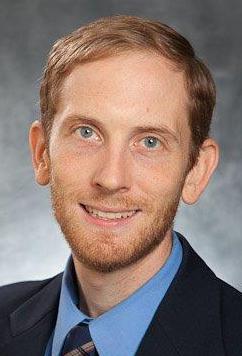 |
Matthew H. Patton Education: Lafayette College, B.S.; Westminster Theological Seminary, M. Div.; Wheaton College, Ph.D. Ordination: Presbytery of Ohio, OPC, 2015 Present position: Pastor, Covenant OPC, Vandalia, Ohio |
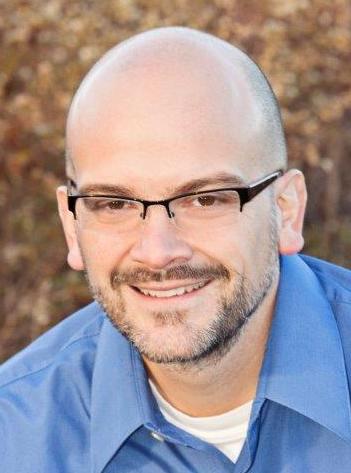 |
John S. Shaw Education: Geneva College, B.A.; Reformed Presbyterian Theological Seminary, M. Div. Ordination: Presbytery of the Midwest, OPC, 2006 Present position: General secretary, Committee on Home Missions and Church Extension |
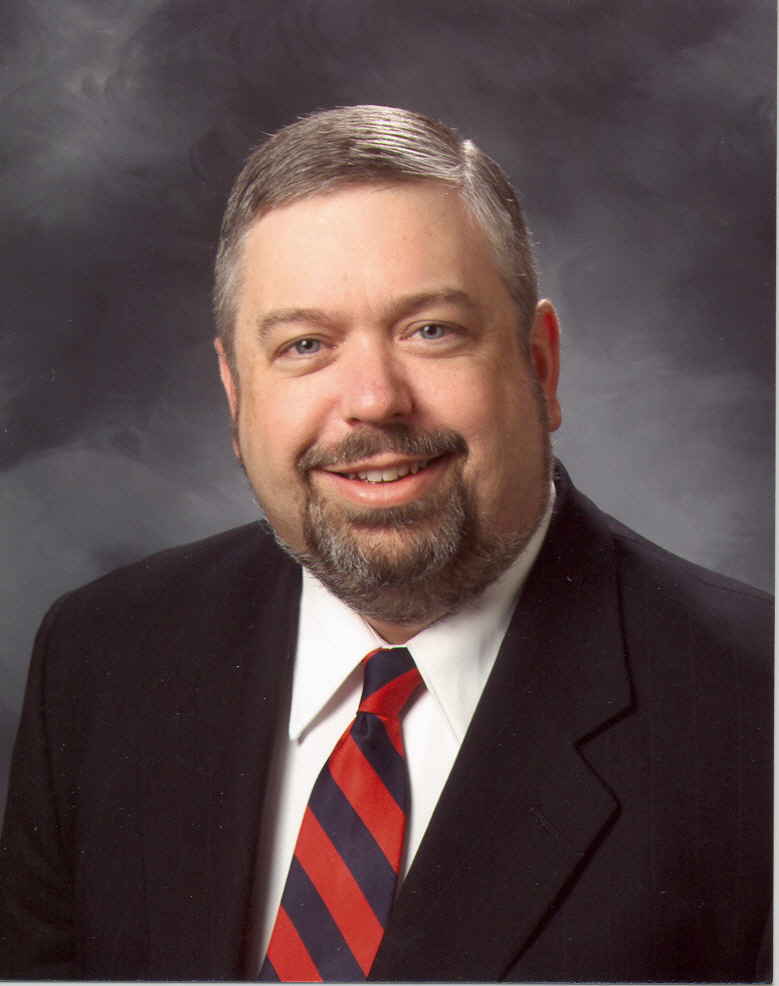 |
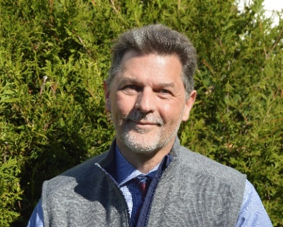
Alan D. Strange Education: Centenary College of Louisiana, B.A.; College of William and Mary, M.A.; Westminster Theological Seminary, M. Div.; University of Wales, Ph.D. Ordination: Presbytery of New Jersey, OPC, 1990 Present position: Professor of church history, theological librarian and registrar at Mid-America Reformed Seminary; associate pastor, New Covenant Community Church (OPC), New Lenox, Ill. |
 |
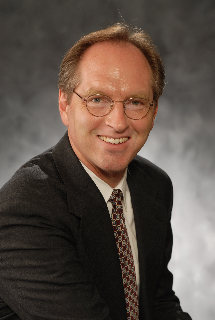
Stephen J. Tracey Education: Queen’s University, Belfast, B.A.; Edinburgh Theological Seminary, Dip. Th.; University of Glasgow, M.Th. Ordination: Evangelical Presbyterian Church (Ireland),1990, received by Presbytery of New York and New England, OPC, 2001 Present position: Pastor, Lakeview OPC, Rockport, Maine |
 |
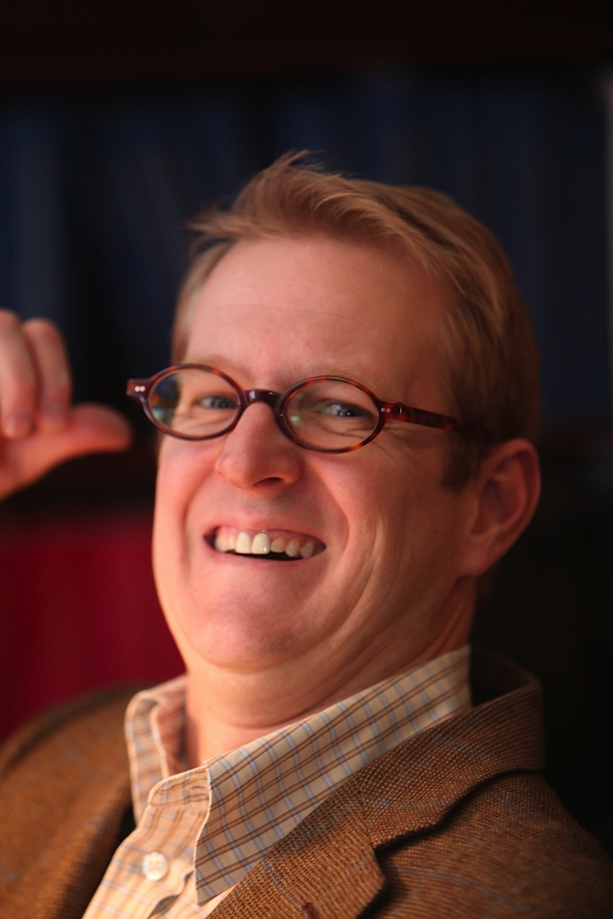
A. Craig Troxel Education: Anderson College, B.A.; Gordon-Conwell Theological Seminary, M.A.T.S.; Westminster Theological Seminary, Ph.D. Ordination: Presbytery of Philadelphia, 1995 Present position: Professor of practical theology at Westminster Seminary California; president, OPC Committee on Christian Education; Associate Pastor of Harvest OPC (San Marcos, CA) |
 |
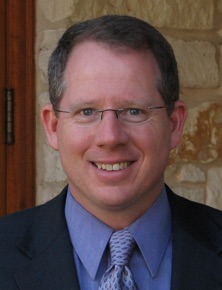
Chad B. Van Dixhoorn Education: Huron College, University of Western Ontario, B.A.; Westminster Theological Seminary, M.Div.; Th.M.; Selwyn College, University of Cambridge, Ph.D.; junior research fellow, Wolfson College, University of Cambridge; postdoctoral fellow, British Academy, University of Cambridge; senior research fellow, Wolfson College, University of Cambridge Ordination: Presbytery of Philadelphia, OPC, 2006 Present Position: Professor of Church History and Theology, Reformed Theological Seminary, Charlotte NC; honorary research fellow, University of East Anglia, Norwich, U.K. |
 |
Dale A. Van Dyke Education: Dordt College, 1985, B.A.; Westminster Seminary California, M.Div. Ordination: Presbytery of the Midwest, OPC, 1995 Present position: Pastor, Harvest OPC, Grand Rapids, Michigan |
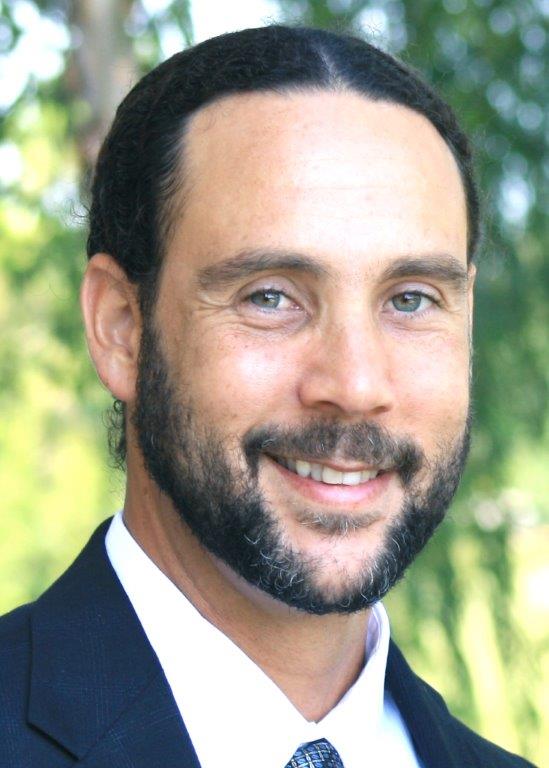 |
Eric B. Watkins Education: Southeastern Bible College, B.S.; Westminster Seminary California, M.Div.; Reformed Theological Seminary Orlando, Th.M.; Theological University, Kampen, the Netherlands, Ph.D. Ordination: Presbytery of the South, OPC, 2001 Present position: Pastor, Harvest OPC, San Marcos, California |
 |
Seminary studies and internships are valuable, but they do not fully prepare a man for ministry in the OPC. Where does he learn about our form of government, denominational distinctives, and history? This is where the MTIOPC is indispensable. I have found the teachers not only to be competent in their field, but to sincerely love the church and her future leaders. The fact that the classes are similar to correspondence courses makes them easy to fit into a hectic schedule. The week of intensive study is far more refreshing than it is intense. In almost every field, continuing education is expected of those who would do well. Why not pastors? MTIOPC is for established pastors, too. Even the best tools need sharpening once in awhile. —Eric Watkins |
 |
I simply cannot express what a great joy it was (and is) for me to take these classes, which have served to deepen my appreciation for the Reformed faith as well as the beauty of Presbyterianism. The men under whom I "sat" are profoundly knowledgeable in the areas assigned to them to teach. Interacting weekly with Stu Jones opened up a whole new world of the intricacies and nuances of Presbyterian polity. Reading stalwarts such as Hodge, Witherow, and Smyth was tremendously helpful. Exercises, such as writing bylaws for a local congregation, were eminently practical. Roughly six weeks after the class began, I found myself having to write bylaws for our church as part of the process of bringing it into the OPC—it was no longer a purely academic exercise. —Mark Melton |
 |
It was a wonderful experience for four of us from the same congregation, Bethel Reformed Presbyterian Church in Fredericksburg, to learn together at MTIOPC. Bill Dennison's assignments on the apologetics of Cornelius Van Til challenged us to work together, and gave us many opportunities to discuss the material. Dr. Dennison's lectures brought out even more discussions and we already see ways in which this time together is preparing us to serve the church better. Our thanks to the Committee on Christian Education for providing this great opportunity and to Dr. Dennison for making this such a valuable experience. —Steve Doe |
 |
Coming from a dispensational background and education, MTIOPC has been more than helpful to me. Apologetics, Ecclesiology, and OPC History have been just a few of the classes that have served to correct or have filled in the gaps of my previous training. —John Hunt |
© 2025 The Orthodox Presbyterian Church