
Ministries
Resources
 |
The 92nd General Assembly of the Orthodox Presbyterian Church is meeting from June 3–9, 2026, at Geneva College, Beaver Falls, Pennsylvania. This running daily report will be written by ruling elder Daniel R. Cooke and edited by Linda Foh. Questions or comments may be addressed to Hank Belfield, stated clerk. Click on one of the following links to go directly to the report for Thursday; Friday; Saturday; Sunday; Monday.
The Ninety-Second General Assembly of the Orthodox Presbyterian Church convened at 7:00 p.m. on Wednesday evening, June 3, on the beautiful campus of Geneva College in Beaver Falls, Pennsylvania. Commissioners, fraternal delegates, and visitors gathered from across the denomination to begin a week of worship, fellowship, and deliberation under the lordship of Jesus Christ.
The Assembly opened not with parliamentary procedure, but with worship. Under the oversight of the Session of Grace Orthodox Presbyterian Church of Sewickley, Pennsylvania, commissioners gathered around Word and Sacrament, setting a distinctly Christ-honoring tone for the days ahead. The hospitality of Geneva College and its staff was evident from the outset, and commissioners enjoyed a warm welcome and excellent accommodations as they arrived throughout the day.
The opening worship service was led by the Rev. Brian L. De Jong, moderator of the Ninety-First General Assembly. Drawing from Luke 17:7–10 and Isaiah 66:1–2, Mr. De Jong preached a sermon entitled “Mere Servants.” His message reminded commissioners that Christ’s church is not advanced through personal ambition, ecclesiastical prestige, or confidence in human wisdom, but through humble obedience to the King who calls his servants to faithful labor. The Lord looks not to the impressive or self-assured, but to the one who is “poor and of a contrite spirit, and who trembles at My word” (Isa. 66:2).
That emphasis on humility, gratitude, and dependence upon Christ provided a fitting beginning for the Assembly’s work. General Assembly commissioners bear significant responsibilities in overseeing the ministries of the church, considering reports, addressing overtures, and exercising the broader assemblies of Christ’s government. Yet the opening sermon served as a timely reminder that every commissioner comes not as a master, but as a servant of Christ and His church.
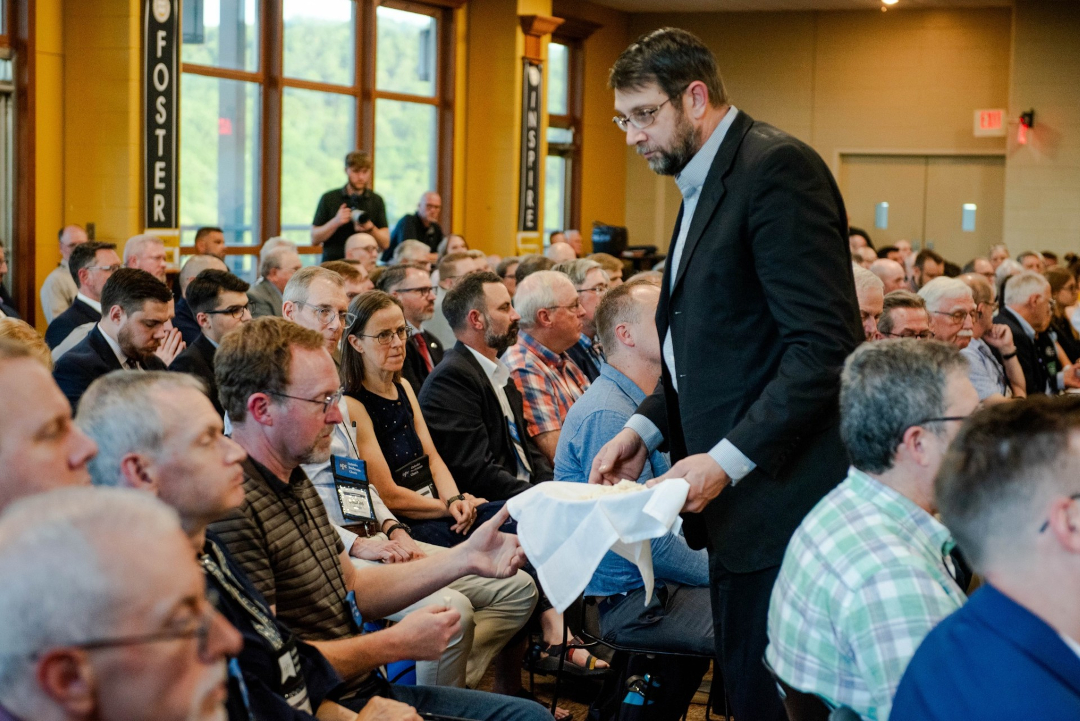
Following the worship service and celebration of the Lord’s Supper, the Assembly was formally constituted at 8:45 p.m., the roll was called, a quorum established, and corresponding members and fraternal delegates were seated according to the church’s standing rules. The Assembly then proceeded with several organizational matters that help prepare the church’s highest judicatory for the work that lies ahead.
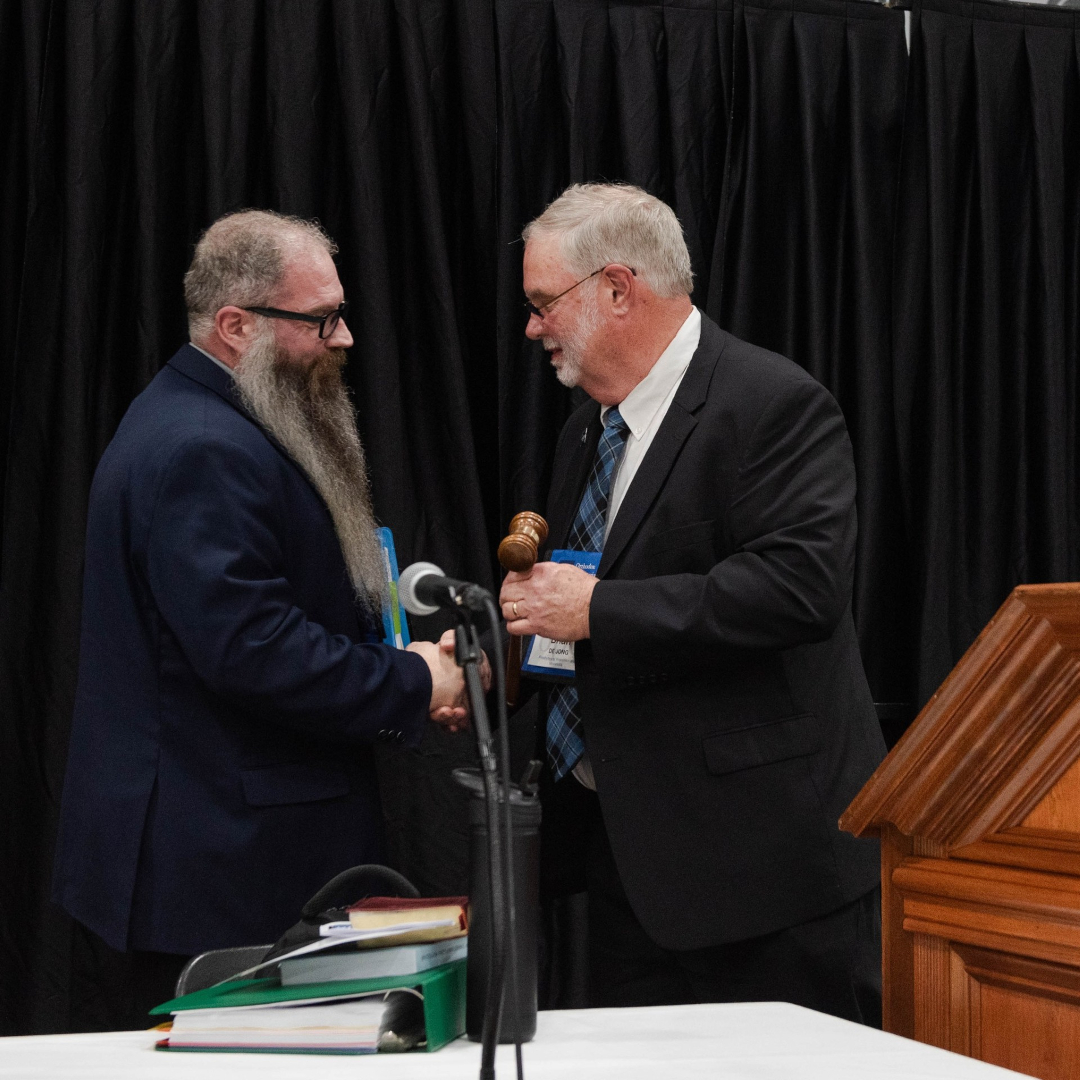
One of the evening’s most significant actions was the election of Rev. Everett A. Henes (Hillsdale, MI) of the Presbytery of Michigan and Ontario as moderator of the Ninety-Second General Assembly. As moderator, Mr. Henes will preside over the Assembly’s deliberations, helping to guide the proceedings with fairness, efficiency, and Christian charity.
The Assembly also received overtures, communications, complaints, and appeals; established its schedule for the coming week; adopted the docket; assigned matters to advisory committees; and elected advisory and temporary committees. Much of the Assembly’s detailed work takes place first in these committees, where reports and recommendations are carefully studied before being brought before the full Assembly for debate and action. This process allows commissioners to examine matters thoroughly and helps facilitate informed discussion when recommendations come before the entire body.
Several encouraging statistics highlighted the composition of this year’s Assembly. Twenty-seven commissioners are attending General Assembly for the first time, a reminder of the Lord’s continuing provision of new leaders for His church. Thirty commissioners grew up in Orthodox Presbyterian congregations, while 106 entered the denomination from other church backgrounds. Twenty-eight commissioners attended the last General Assembly held at Geneva College. Particularly noteworthy was the presence of one commissioner, the Rev. Stephen L. Phillips (retired), who was ordained to office in the 1960s, a testimony to decades of faithful service in Christ’s church.
As the Assembly began its work, commissioners were mindful that church government is ultimately a spiritual task. The week ahead will include reports from denominational committees and agencies, consideration of overtures from the presbyteries, judicial matters, and opportunities for fellowship and mutual encouragement. Yet the first evening established the central truth that must govern every discussion and decision: Christ alone is the Head of the Church, and His servants are called simply to be faithful.
The Assembly recessed at 9:35 p.m. and will reconvene Thursday morning, June 4, as commissioners begin the substantive work assigned to the advisory committees and continue the business of the church. Please pray that the Lord would grant wisdom, humility, unity, and faithfulness to all who serve during the week ahead.
The Ninety-Second General Assembly of the Orthodox Presbyterian Church gathered Thursday morning, June 4, for the first full day of deliberations on the campus of Geneva College. Following Wednesday evening’s opening worship service and the formal organization of the Assembly, Thursday’s docket turned toward the substantial work of receiving reports, assigning matters to advisory committees, and preparing recommendations that will come before the full Assembly.
One encouraging feature of the Assembly’s rhythm is the way worship remains woven throughout the week. Following recesses, commissioners reconvene by singing a hymn or psalm together before returning to the docket. It is a simple practice, but one that reminds all present that the General Assembly is more than a deliberative body. It is the gathered church of Jesus Christ seeking to conduct its work under the authority of God’s Word and in dependence upon his grace.
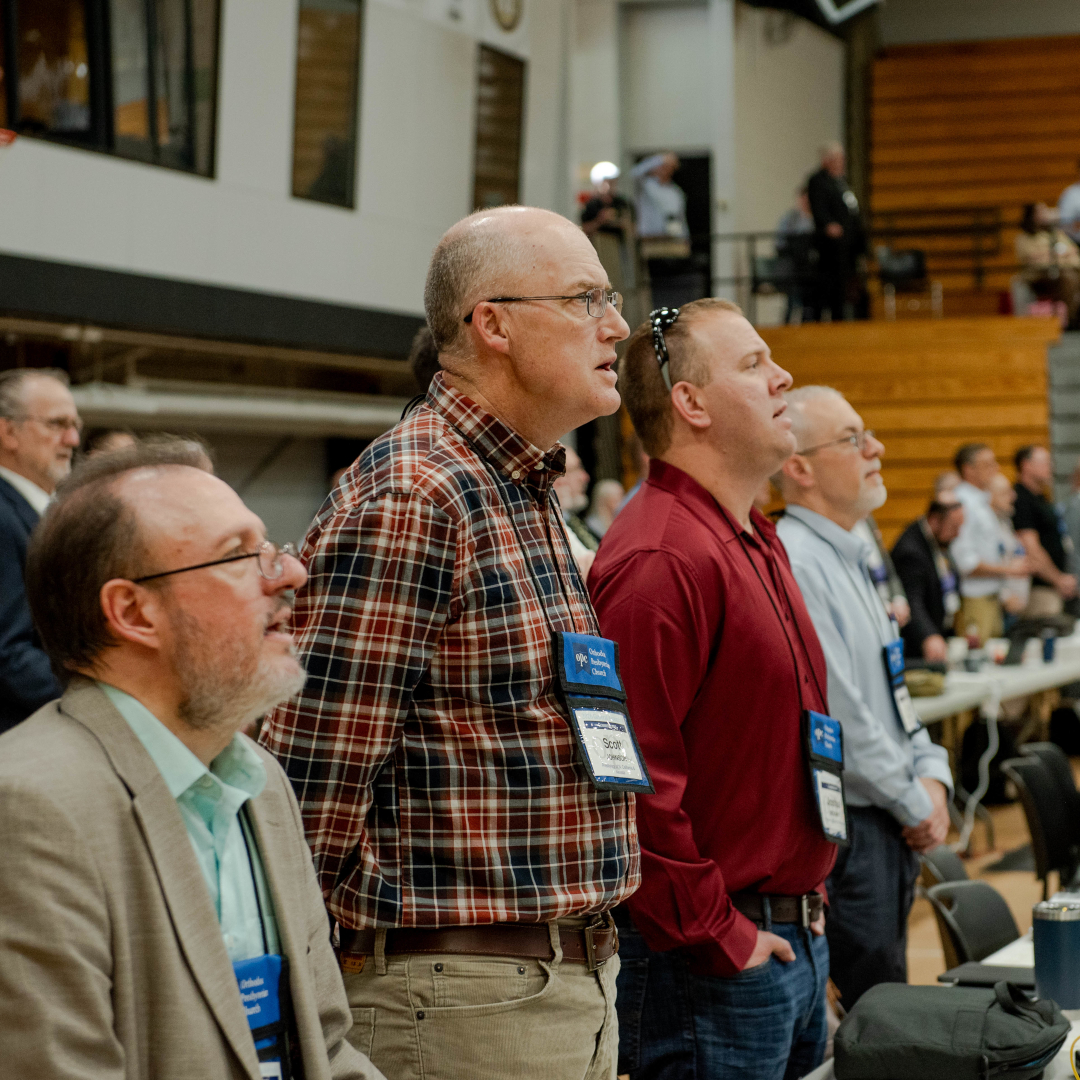
Much of Thursday morning and early afternoon’s work took place in advisory committees. Advisory committees are temporary committees of commissioners assigned to review the reports, recommendations, overtures, appeals, complaints, and other matters placed before the Assembly. They do not act in place of the Assembly; rather, they examine the material in detail, hear from presenters, ask questions, consider possible amendments, and then bring advice back to the full Assembly when it resumes general session. The final decisions remain with the commissioners meeting together in General Assembly.
This committee process allows the Assembly to handle a large volume of business with both efficiency and deliberation. Instead of every report being examined first in full detail on the floor, advisory committees provide careful preliminary review. Their work helps clarify issues, refine recommendations, and prepare the Assembly for orderly debate and action.
Each advisory committee is assigned a particular portion of the Assembly’s business. Some committees review the reports of the church’s standing committees, such as Christian education, foreign missions, home missions, diaconal ministries, ministerial care, and coordination. Others examine overtures from presbyteries, matters of appeals and complaints, proposed changes to the Form of Government or Standing Rules, or the review of presbytery records. In advisory committees, commissioners may ask questions that would be too detailed or time-consuming for the full floor, and presenters are often able to explain the background and purpose of their recommendations more fully.
The work is deliberately Presbyterian. Matters are not simply presented and approved. They are tested by brothers from across the church. Ministers and ruling elders from various presbyteries labor together, ask questions, propose amendments, and seek language that will serve the church well. When the advisory committees later report back to the whole Assembly, starting Thursday afternoon, the Assembly receives not merely raw recommendations but counsel that has already been examined in smaller settings.
This structure also helps newer commissioners learn the work of the broader church. First-time attendees are able to sit with more experienced commissioners, observe the handling of reports and recommendations, and participate in the process by which the Assembly prepares to deliberate and act. In this way, the advisory committee system serves both the efficiency of the Assembly and the continuing formation of commissioners in the courts of the church.
Before breaking for the midday meal, the Assembly gathered once again around the Word of God for the daily devotional service. Rev. Stephen A. Migotsky (retired) of the Presbytery of New York and New England led commissioners in a time of Scripture, prayer, and reflection on Matthew 4:1-11. These daily devotional services, held each full day of business throughout the Assembly, provide a welcome opportunity to pause from deliberations and refocus hearts upon Christ and His kingdom. During reports, recommendations, and parliamentary procedure, commissioners are reminded that the church’s work must always remain grounded in the ministry of the Word and dependent upon the grace of God.
Following lunch, the advisory committees resumed their work and continued meeting throughout the early afternoon. Commissioners spent these additional hours reviewing reports, discussing recommendations, and preparing advice for the full Assembly’s consideration. Advisory committee meetings concluded at approximately 3:35 p.m., at which time the Assembly reconvened in general session and began its substantive floor business.
Once reconvened, the Assembly will begin receiving reports from the church’s officers, agencies, and standing committees. Over the coming days commissioners will hear reports from the stated clerk, trustees, statistician, and the denomination’s various standing committees, including Home Missions and Church Extension, Foreign Missions, Christian Education, Coordination, Diaconal Ministries, Ministerial Care, Ecumenicity and Interchurch Relations, Appeals and Complaints, Chaplains and Military Personnel, and others. These reports provide the Assembly with a broad view of the ministry of the Orthodox Presbyterian Church both at home and abroad.
For many, this portion of General Assembly offers one of the clearest windows into the life of the denomination. While local congregations naturally focus on the worship and ministry of their own churches, the Assembly allows commissioners to see how the Lord is blessing and advancing the church through missions, church planting, Christian education, mercy ministry, military chaplaincy, and international outreach. The reports are therefore more than administrative reviews. They are opportunities to reflect upon God’s faithfulness, assess the church’s stewardship, and consider how best to strengthen these ministries in the years ahead.
A bit of OPC history may help place this week’s gathering in context. Geneva College has been a familiar host for the General Assembly over the years. In 1997, the Sixty-Fourth General Assembly also met here in Beaver Falls, opening with worship and a sermon from Philippians 3:1–21 entitled “Our Citizenship in Heaven.” The setting has changed in many ways since then, but the essential work remains the same: commissioners gather to worship, deliberate, and seek the peace, purity, and unity of Christ’s church.
The work of the Ninety-Second General Assembly continued Thursday afternoon and evening with reports from several of the church’s standing committees, encouraging updates from home and foreign mission fields, and repeated reminders of both the opportunities and needs facing the Orthodox Presbyterian Church in the years ahead.
Following the afternoon recess, Moderator Henes reconvened the Assembly at 3:45 p.m. with prayer and the singing of Psalm 122A. Throughout the week, commissioners have continued the encouraging practice of lifting their voices together in psalmody and hymnody whenever the Assembly reconvenes after breaks—a simple but meaningful reminder that all the business of the church is ultimately conducted under the lordship of Christ.
The Committee on Ecumenicity and Interchurch Relations introduced the Assembly’s fraternal delegate from the Free Reformed Churches of North America, Rev. Pieter VanderMeyden. Speaking warmly of the long-standing relationship between the OPC and the Free Reformed Churches, Rev. VanderMeyden recounted the history of the denomination, tracing its roots to immigrants arriving from the Netherlands during the 1950s and 1960s. He also noted more recent developments within the Dutch Reformed world and the Free Reformed Churches’ commitment to maintaining a faithful witness amid growing theological liberalism elsewhere. His address was marked by gratitude for the fellowship shared between the denominations and concluded with the reading of Jude 24–25.
The Assembly then turned to the report of the Stated Clerk, Rev. Hank Belfield (Providence OPC, Chilhowie, VA). Rev. Belfield provided an overview of the year’s work and expressed heartfelt appreciation for the volunteers and support staff whose often unseen labor makes the work of the clerk’s office possible.
The office of Stated Clerk is one of the most important administrative positions in the church. The clerk records and preserves the acts of the General Assembly, maintains denominational records, receives communications from presbyteries and committees, oversees the preparation of Assembly materials, coordinates constitutional amendments, assists with parliamentary procedure, and serves as an institutional memory for the denomination. Rev. Belfield also recognized Rev. John Mahaffy (Trinity OPC, Newberg, OR), who has faithfully served as Assistant Clerk of the General Assembly for twenty-seven years.
Notably, the advisory committee reviewing the work of the Stated Clerk was silent, indicating complete satisfaction with the report and no recommendations beyond expressions of gratitude for faithful service.
The Assembly approved two amendments to the Standing Rules. The first clarified procedures regarding requests for displays and exhibits at the Assembly, assigning such requests directly to the Committee on Arrangements. The second amended Standing Rule X.2.c by replacing the phrase “teaching elders” with “ministers” and formally establishing a Ministerial Training Subcommittee within the Committee on Christian Education. The new subcommittee will assist churches and presbyteries in identifying and preparing men for gospel ministry, strengthening theological training, consulting with seminaries, and encouraging continuing education among ministers.
Following prayer for Mr. Belfield and the work of the clerk’s office, the Assembly received the report of the Trustees of the Orthodox Presbyterian Church, presented by Rev. Stephen Phillips (retired minister, Quarryville, PA).
Mr. Phillips noted that it had been a relatively quiet year for the Trustees. Nevertheless, one recommendation was approved by the Assembly. The recommendation encourages presbyteries to carefully consider incorporating their entities where appropriate in order to strengthen legal protections and facilitate the orderly administration of church affairs.
The Assembly also re-elected Mr. Phillips and Ruling Elder Kelvin Monteith (Gastonia, NC) to new terms on the Board of Trustees through 2029.
The report of the Statistician followed. Because Statistician Michael Hammons was unable to attend due to health concerns, the report was presented by Ruling Elder James Gidley of Sewickley, PA.
The statistical report offered many reasons for thanksgiving.
At the end of 2025, total OPC membership stood at 33,941, representing an increase of 397 members over the previous year. This total included 601 ministers, 24,973 communicant members, and 8,367 baptized children. Communicant membership increased by 358, aided by 805 professions of faith and 1,183 reaffirmations of faith.
Attendance also showed healthy growth. Morning worship attendance increased by 2.47 percent over 2024, reaching 27,094. Sunday school attendance increased by 1.69 percent to 12,448. Across the denomination, sixty-eight percent of congregations and mission works reported holding evening worship services.
Financial giving likewise continued its upward trajectory. Total giving reported by OPC congregations rose 4.16 percent, while benevolence giving totaled nearly $11 million.
The report also highlighted continued growth in church planting. The number of missions works increased from forty-one to forty-three. Nine new mission works were received or started during the year, including Good Shepherd OPC, Greenville, NC, while five mission works were organized as particular congregations. Among those organized were Landis OPC, Marion, NC, and Zion OPC, Wake County, NC, both within the Presbytery of the Southeast
Mr. Hammons was re-elected Statistician, and the Assembly joined in prayer for his health and for the continued growth of Christ’s church.
The remainder of the afternoon was devoted to the report of the Committee on Home Missions and Church Extension.
The report featured presentations from church planters and regional home missionaries serving throughout North America.
Rev. Kevin Godsey, Radiant OPC, Peoria, Illinois, spoke warmly about opportunities for ministry in central Illinois and the encouraging response to the preaching of God’s Word in his community.
Rev. David Myhren, Bread of Life OPC, Troy, Ohio, shared how the Lord has blessed both his church planting efforts and his chaplaincy ministry in local hospitals. He recounted recent baptisms, new visitors, and numerous opportunities to minister the gospel to people with little prior exposure to biblical Christianity.
Assistant General Secretary Rev. Al Tricarico, now in his eleventh year of service, reminded commissioners that church planting remains fundamentally local work. Presbyteries, sessions, and congregations carry primary responsibility for planting and nurturing new churches, while the Committee seeks to strengthen and support those efforts. He highlighted various training opportunities available to church planters and mission works and emphasized the importance of prayerful support.
Attention was given to the Seed and Sower Fund, which has been used extensively to support church planting efforts across the OPC. While the fund has been a tremendous blessing, it is nearing depletion. The committee urged churches and individual members throughout the denomination to consider contributing to this important work.
One of the most memorable presentations came from Regional Home Missionary Charles Biggs of the Presbytery of the Mid-Atlantic. With characteristic enthusiasm and pastoral warmth, Mr. Biggs described the growth of Bible studies, conferences, mission works, and outreach opportunities throughout the region. His report repeatedly directed attention away from human effort and toward the faithfulness of Christ in building His church.
The committee also highlighted the work of its Church Revitalization Subcommittee, which seeks to assist struggling congregations and strengthen established churches. Additional resources are available through CHCME.org.
Following dinner, the Assembly welcomed fraternal delegates from the Presbyterian Church in America. Rev. Fred Greco addressed the Assembly on behalf of the PCA, accompanied by Rev. John Bise and former OPC minister Rev. Lowell Ivey, now Director of Metanoia Prison Ministries.
Rev. Greco spoke warmly of the longstanding friendship between the OPC and PCA and expressed gratitude for the mutual support enjoyed by the two denominations. His remarks emphasized unity in the gospel, faithfulness to Scripture, and the importance of cooperation between confessional Presbyterian churches. Rev. Dr. Alan Strange subsequently led the Assembly in prayer for the PCA and its upcoming General Assembly.
When the Home Missions report resumed, General Secretary Rev. Jeremiah Montgomery presented a sobering statistic. The OPC currently has forty vacant pulpits, representing slightly more than ten percent of the denomination’s congregations.
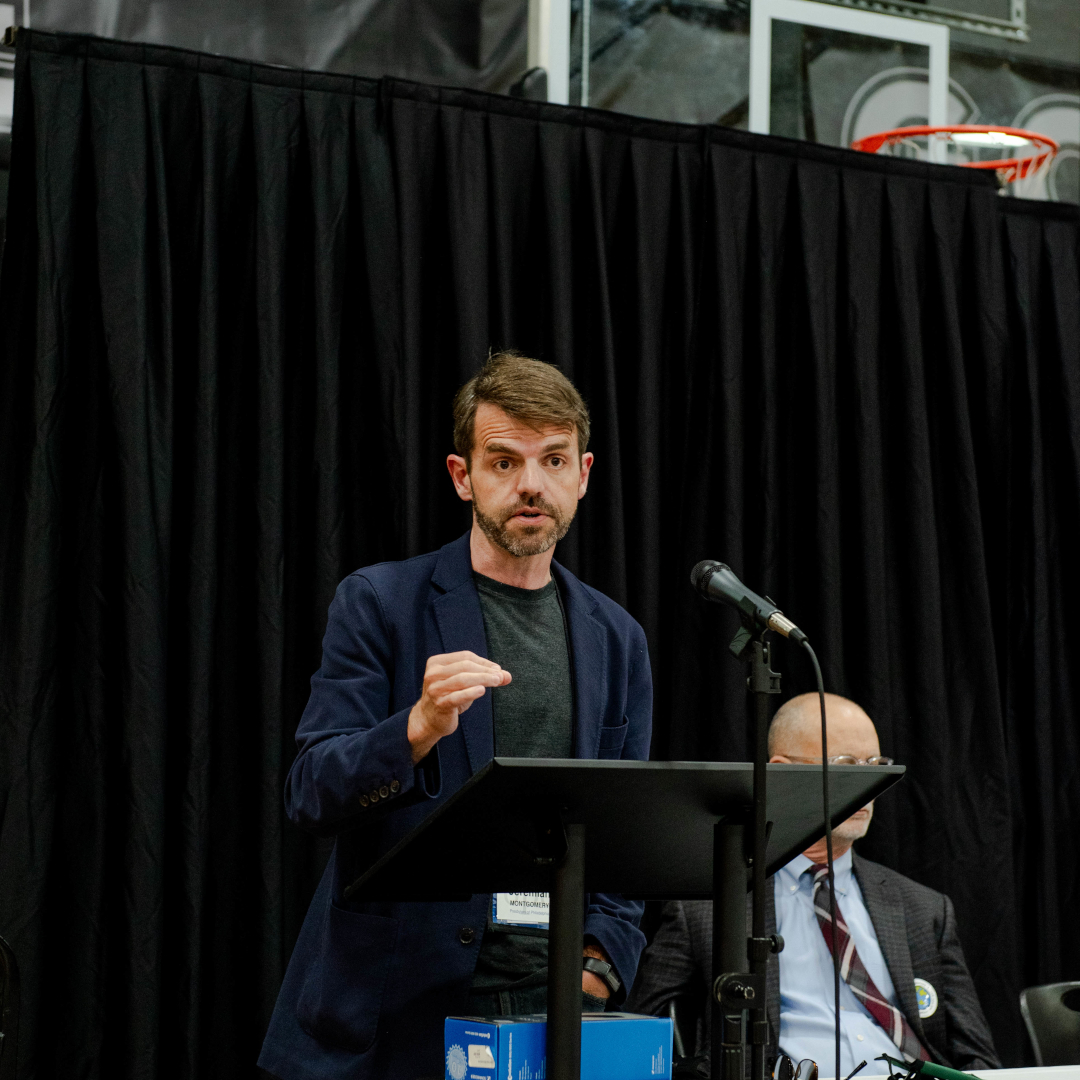
The need for ministers was a recurring theme throughout the day’s proceedings. Mr. Montgomery urged churches, sessions, parents, and presbyteries to pray earnestly that the Lord would raise up a new generation of faithful preachers of the gospel. The harvest remains plentiful, but laborers remain few.
Elections were then held. Rev. Robert Arendale (Redeemer OPC, Dayton, OH) was elected to the Committee on Home Missions and Church Extension in the ministerial class of 2027. Elected to the class of 2029 were ministers Christopher D. Hartshorn (RHM, Presbytery of Southern California), C. Steve McDaniel Jr., and J. Mark Sallade (both Calvary OPC, Glenside, PA), along with ruling elders Jeremy R. Geaslen and Tim Williams.
The committee’s report concluded with prayer, especially for the raising up of future ministers and for renewed support of the Seed and Sower Fund.
At 7:25 p.m. the Assembly received the report of the Committee on Foreign Missions. The report marked an important transition as retiring General Secretary Rev. Douglas Clawson and newly appointed General Secretary Rev. Benjamin Hopp addressed the Assembly together.
Commissioners first heard from missionary Mr. Travis Emmett regarding the work in Karamoja, Uganda. Reports from the field testified to both the hardships and blessings of gospel ministry in East Africa. The OPC-supported clinic in Nakaale treated more than 18,000 patients during the past year, providing vital medical care while supporting the church’s witness in a region where Reformed Christianity remains scarce.
The Assembly also heard from a veteran missionary, who has now served in OPC foreign missions for thirty-two years. His enthusiasm for evangelism and his unwavering commitment to bringing the gospel to those who have never heard it served as a powerful encouragement to the Assembly.
Mr. Clawson reported with gratitude that new missionaries have recently entered the field. Yet he also noted a growing concern: there are presently no active missionary applicants preparing for foreign service. Once again, commissioners were reminded of the urgent need for workers both at home and abroad.
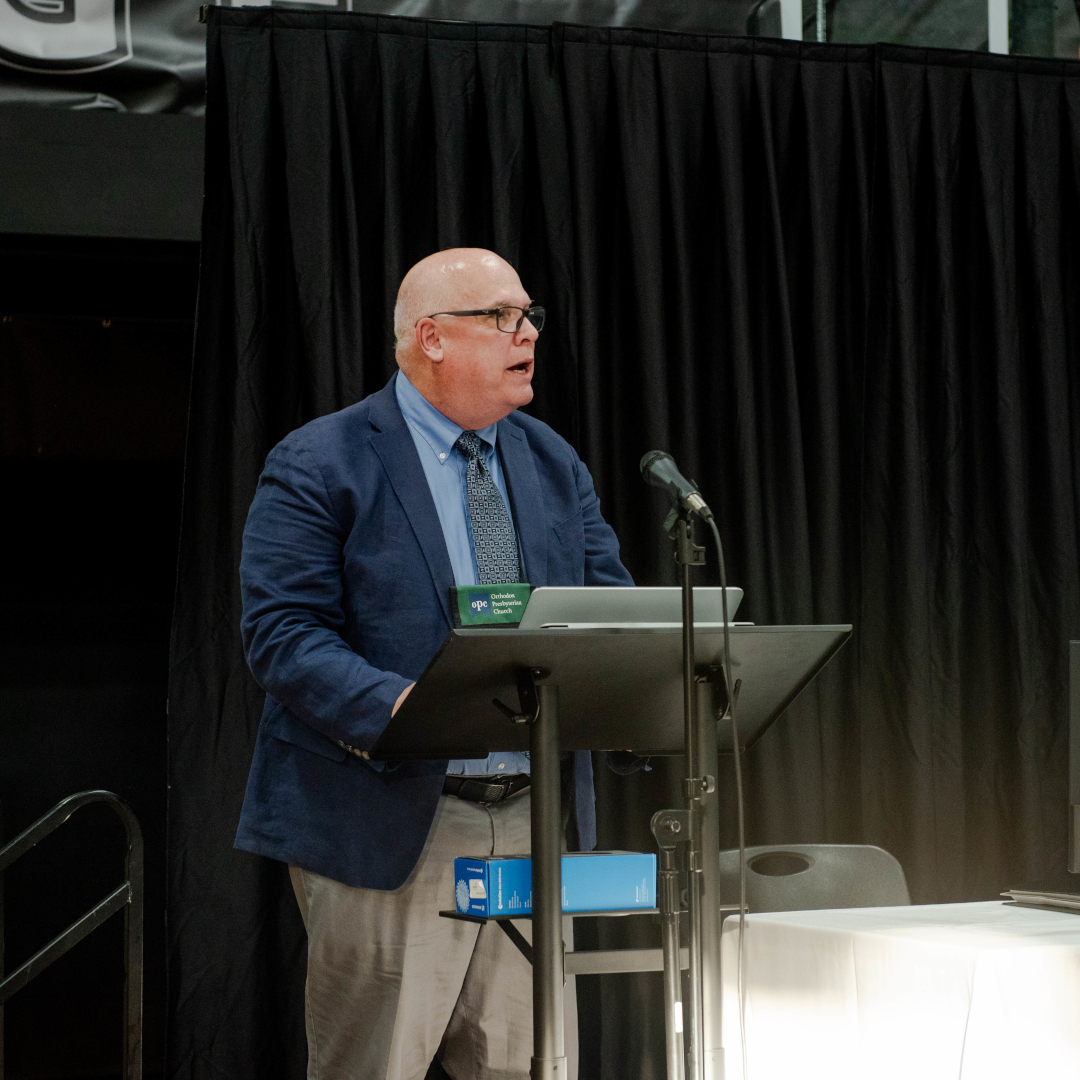
Mr. Hopp then presented a compelling vision for the future of OPC foreign missions. Reflecting on the denomination’s missionary heritage, he called upon churches to cultivate missionary-minded young people and to pray that God would raise up laborers willing to go wherever Christ may call them.
One point of clarification generated interest among commissioners: prospective missionaries are required to complete a full seminary degree before beginning missionary service. However, under current policy, only two years of ministerial training are required before entering the foreign mission field, allowing gifted men to begin missionary labor while continuing preparation and oversight through the church.
A particularly moving moment came when the Assembly heard and adopted a Resolution of Thanks honoring Rev. Douglas Clawson for more than twenty-four years of faithful service to the Committee on Foreign Missions upon his retirement in September 2026:
RESOLUTION The Committee on Foreign Missions of the Orthodox Presbyterian Church (OPC) hereby makes known to the Rev. Douglas B. Clawson, our deep thankfulness to the Lord for you and for your faithful and diligent labors on behalf of Christ and the foreign missions work of the OPC for more than twenty-four years.
Called to the gospel ministry and ordained by the Presbytery of Ohio on November 30, 1984, your first charge was as an evangelist at Grace OPC in Sewickley, Pennsylvania. In 1987 you were called to serve as the pastor of Grace OPC in Hanover Park, Illinois, where you remained until beginning your service as Associate General Secretary of the Committee on Foreign Missions in 2002.
During your tenure as Associate General Secretary, you faithfully supported the Committee’s work, laboring harmoniously with General Secretary Mark Bube. Notable was your commitment of time and energy to communicate clearly the goals and actions of the Committee, providing diligent and effective service in the home office and abroad. You traveled over 1,907 days to visit forty-one countries across five continents, where you provided guidance and encouragement to our missionaries, offered pastoral advice and teaching to indigenous churches, and embraced warm fellowship with our brothers and sisters around the world. You presented the work of the Committee in hundreds of visits to OP churches and presbyteries and maintained your faithful involvement with the Presbytery of the Midwest. In addition, you took up the work of instructor in homiletics for the Ministerial Training Institute of the OPC in 2014. In 2022 you began your tenure as the Committee’s General Secretary, continuing your arduous labors without the support of an Associate General Secretary, expanding the work of the Mobile Theological Mentoring Corps, creating the role of Regional Foreign Missionary, and developing potential missionaries.
We praise God for your dear wife Patricia, who joyously served at your side through your twenty-four years of service to the Committee. She wholeheartedly supported you and our missionaries with prayer and encouragement, even through sometimes frequent and long absences necessitated by your travels to the mission fields. She cheerfully assisted with hospitality at our annual meetings. Together you weathered Pat’s serious health issues and the grief of your daughter Kathleen passing away in 2019. We give thanks to our Lord for Pat’s faithful behind-the-scenes commitment to you and your ministry.
Our dear brother, during all the years of our laboring together to advance the cause of Christ and His kingdom to the nations, your warm love for Christ; your diligence and wisdom; and your gentle, humble, and patient leadership displayed to us all the Holy Spirit’s grace at work in you. Christ does indeed give good gifts to His church, and we thank Him for giving you to us. Know that we miss you, for you are much loved among us, and we consider it a high honor to have labored with you in the fields of our Savior that are indeed ripe unto harvest.
The Assembly responded with sustained appreciation for a brother whose labors and love for Christ and his Church have touched virtually every corner of the OPC’s foreign missionary enterprise.
The report concluded with elections to the Committee on Foreign Missions. Elected in the ministerial class of 2029 were Rev. Jeremy Jones (Covenant OPC, Grove City, PA), Mr. John Mahaffy, and Rev. Charles Williams (Redemption OPC, Gainesville, FL). Elected in the ruling elder class were Andres Czerwiak (Capistrano Beach, CA) and John Davis.
As a point of personal note, I would express appreciation for the many young men and women serving throughout the week as pages, drivers, and volunteers. Their cheerful assistance, willingness to serve, and joyful spirit have been evident at every turn. Whether directing commissioners, transporting guests, carrying materials, or assisting committees, they have embodied the servant-hearted example commended by Mr. De Jong during Wednesday evening’s opening worship service. Their presence has been a blessing to the Assembly and a visible reminder that Christ continues to raise up another generation eager to serve His church.
As Thursday’s business concluded and commissioners prepared for another full day on Friday, one theme stood above the rest. Whether in church planting, vacant pulpits, foreign mission fields, theological education, or ministerial training, the Orthodox Presbyterian Church faces an urgent need for laborers. Again, and again the Assembly heard the same call: pray that the Lord of the harvest would raise up men to preach Christ, shepherd His people, and carry the gospel to the ends of the earth.
The Assembly adjourned shortly after 8:30 p.m. and will reconvene Friday morning at 8:00 a.m. for another day of worship, deliberation, and service in the courts of Christ’s church.
The Ninety-Second General Assembly reconvened Friday morning at 8:30 a.m. with prayer and the singing of Psalm 67A. Another beautiful morning greeted commissioners here in Beaver Falls as the Assembly gathered to continue the work of Christ’s church.
The first item of business was the adoption of a motion calling the churches of the Orthodox Presbyterian Church to a season of prayer and fasting during the week beginning September 13, 2026, asking the Lord of the Harvest to raise up and equip men for gospel ministry both at home and abroad. It was a fitting way to begin the day. Before considering budgets, reports, elections, or judicial matters, the Assembly first acknowledged that the church’s greatest need is not ultimately programs or plans, but the blessing of God upon the preaching of His Word.
The Assembly next heard the report of the Committee on Christian Education. Rev. Danny Olinger, General Secretary of the Committee, has served the denomination with a servant’s heart for many years. Rev. Craig Troxel, president of the Committee, walked the Assembly through the report.
Rev. Olinger introduced Mr. John Dunahoo from Great Commission Publications, the joint publishing ministry of the OPC and PCA. Commissioners heard encouraging updates regarding catechetical materials, curriculum development, and ongoing efforts to strengthen and rebrand resources for churches.
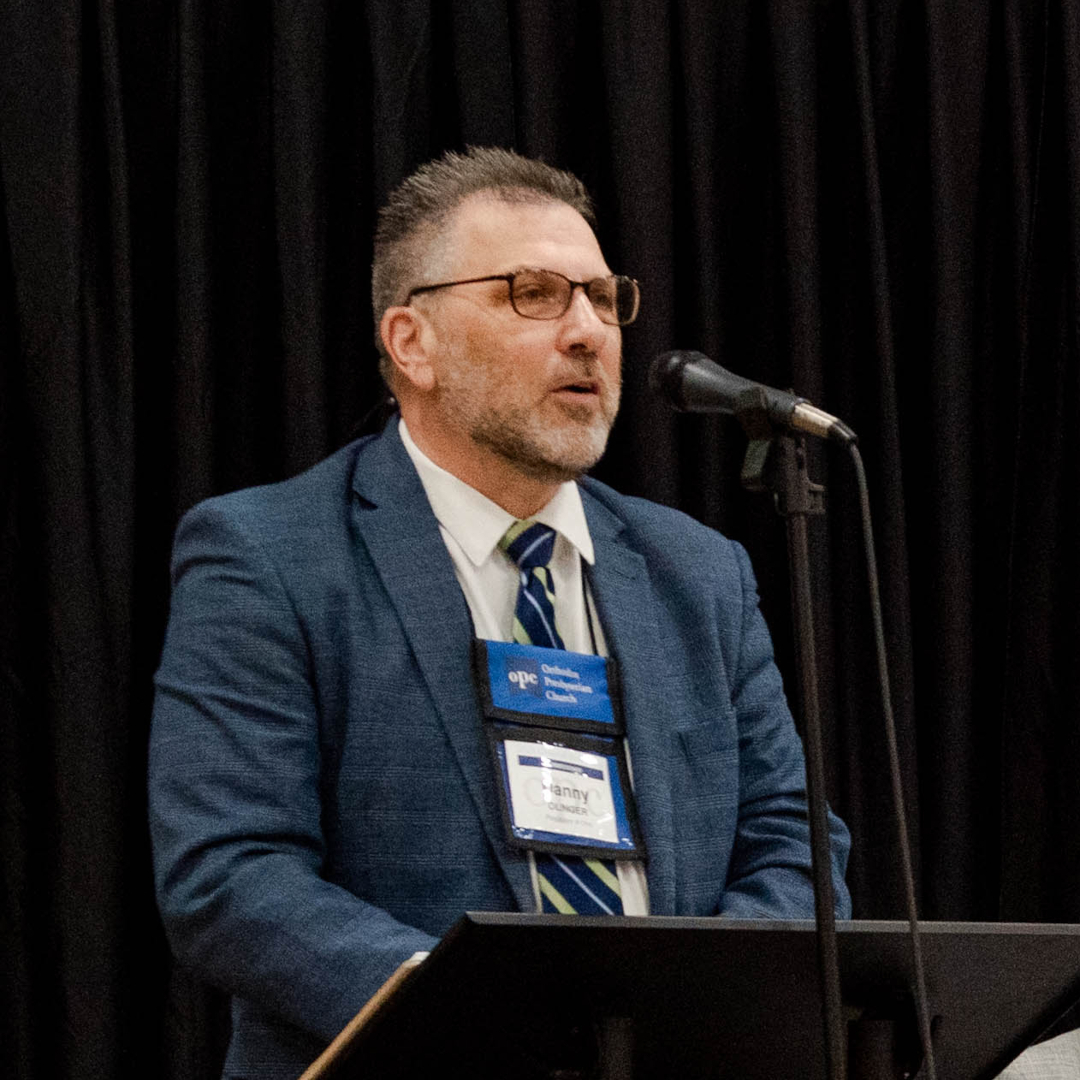
Many OPC congregations have benefited from this partnership over the years. From Sunday school curriculum to educational materials, and from catechetical resources to the Trinity Psalter Hymnal found in the pews of most OPC churches, the work of Christian Education quietly touches nearly every congregation in the denomination.
The Assembly also heard testimonies from men currently serving in gospel ministry who pointed to the Timothy Conference as a significant influence in discerning their call to ministry. Such testimonies serve as powerful reminders that investments made in the next generation often bear fruit many years later.
Commissioners also received an update from the Trinity Psalter Hymnal Committee. The hymnal is now in its eighth printing, a remarkable milestone that reflects its widespread use both within the OPC and beyond. Mission works were reminded that a thirty-five percent discount remains available for the purchase of Trinity Psalter Hymnals.
One of the encouraging themes running throughout the report was the realization that Christian education is not simply another program of the church. It is one of the principal means by which the Lord prepares future elders, deacons, missionaries, ministers, and faithful church members. Every catechism class taught, every conference held, every curriculum published, and every hymn sung contributes in some way to the long-term health of Christ’s church.
The Assembly then viewed a brief video honoring Dr. James S. Gidley upon his retirement after decades of faithful service. A Resolution of Thanks was entered into the minutes recognizing his extraordinary contribution to the Committee on Christian Education and to the Orthodox Presbyterian Church.
Resolution of Thanks for Dr. James S. Gidley Whereas Dr. James S. Gidley served faithfully on the Committee on Christian Education for thirty-six years (1989–2025); and
Whereas Dr. Gidley served faithfully as president of the Committee for seventeen years (2002–2019), the longest continuous service as president in the history of the Committee;
Therefore be it resolved, that the 92nd General Assembly of The Orthodox Presbyterian Church offers thanksgiving and praise to Almighty God for the gift of Dr. James S. Gidley, who with humble dedication, devotion, wisdom, and fruitfulness carried out extraordinary service to the Committee on Christian Education, to the entire Orthodox Presbyterian Church, and to Jesus Christ, the only Head of the Church, who has employed his servant, Dr. Gidley, for the building up and the furthering of his kingdom.
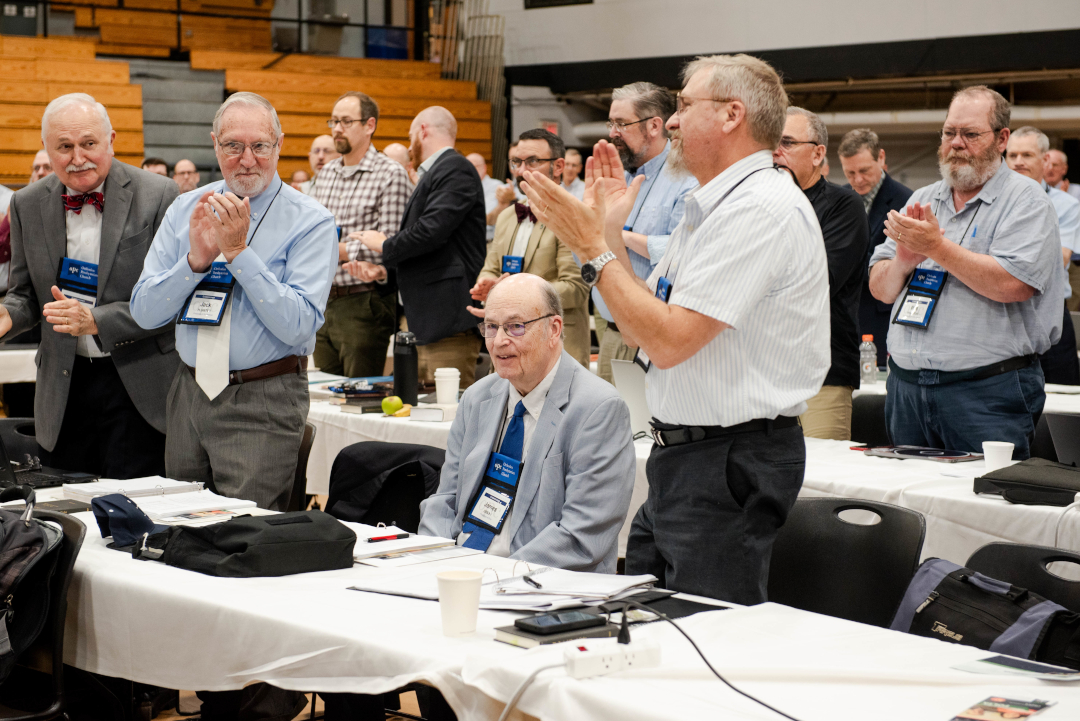
Following the report, elections were held. Rev. Craig Troxel (Harvest OPC, San Marcos, CA), Rev. Harrison Perkins (Oakland Hills Community Church OPC, Farmington Hills, MI), and Rev. Zachary Simmons (Resurrection OPC, State College, PA) were elected. Messrs. Patel and Downs were elected as the two ruling elders. The Committee was thanked for its diligent labor and prayed for before the Assembly moved on to the next item of business.
The Assembly next heard the report of the Committee on Coordination. Rev. Scott Johnson (Reno, NV), chairman of the Committee, presented the report.
The Committee on Coordination performs much of the behind-the-scenes work necessary for the denomination to function smoothly. It coordinates committee activities, oversees budgetary matters, reviews financial concerns, and assists in ensuring that the church’s resources are stewarded wisely.
Commissioners were encouraged to hear that giving throughout the denomination remains strong. The Committee also reported positively on the reach and effectiveness of various communications and social media efforts.
Several questions were raised regarding investments and financial stewardship, allowing commissioners to better understand how funds entrusted to the church are managed and utilized.
For many church members, the work of Coordination is largely unseen. Yet without such work, much of what happens elsewhere in the denomination would become considerably more difficult. In many ways the Committee serves as connective tissue between the various ministries of the Orthodox Presbyterian Church.
Following the report, elections were held. Rev. Warren R. Bennett III (Covenant Presbyterian Church OPC, Natchitoches, LA) was elected minister member for the class of 2029, and Ruling Elder Keith LeMahieu was elected ruling elder member for the class of 2029.
The Assembly next received the report of the Committee on Diaconal Ministries. Ruling Elder David Nakhla (Glenside, PA), Administrator of the Committee, presented an encouraging report regarding the expanding work of mercy ministry throughout the denomination.
Giving to the Committee remains strong, enabling a wide variety of ministries both domestically and internationally. Commissioners heard updates regarding disaster relief, mercy ministry partnerships, support for presbytery diaconal committees, and ongoing efforts to strengthen diaconal service throughout the church.
Following a brief recess, the Assembly heard from Rev. Dirk Poppe of the Free Reformed Churches of Australia. Rev. Poppe noted that his father had addressed the OPC General Assembly approximately thirty years ago, highlighting the long-standing relationship between the two denominations.
He reported that the Free Reformed Churches continue to grow while maintaining their commitment to the Reformed faith as expressed in the Three Forms of Unity. Like many churches around the world, they face increasing pressure from governments and cultures that are increasingly hostile to biblical Christianity. He requested prayer that the gospel would continue to penetrate hearts and that God’s truth would continue to advance despite such challenges.
The Assembly expressed gratitude for these faithful brothers “Down Under” and prayed for God’s blessing upon their churches. The Committee on Diaconal Ministries then resumed its report. Commissioners heard updates regarding Diaconal Summits and training opportunities designed to strengthen the work of deacons throughout the denomination. These gatherings provide practical, hands-on opportunities for deacons to learn from one another and sharpen their service to Christ and His people.
Particularly moving was a report concerning Ukraine. Through its partnership with the Evangelical Presbyterian Church of Ukraine, the OPC continues to assist believers facing the hardships of war. A video presentation showed congregations continuing to worship faithfully even as many men are called away to military service.
One could not help but be reminded of Christ’s promise that the gates of hell shall not prevail against His church. Even amid war, uncertainty, and suffering, church buildings continue to fill with worshipers gathering to hear the Word of God. The Committee also encouraged young people to consider participation in Short-Term Missions opportunities. Many who have participated testify to the life-changing impact of serving alongside brothers and sisters around the world.
As elections concluded, Mr. Bill Rossier was elected to the class of 2027. Mr. John Stahl, Ruling Elder Seth Long, and Rev. Joseph Troutman (Mid-Cities Presbyterian Church OPC, Bedford, TX) were elected to the class of 2029.
God continues to provide His church with men willing and able to serve and possessing a genuine heart for His people.
The Committee on Diaconal Ministries is one of the younger standing committees of the Orthodox Presbyterian Church. Its growth over recent decades reflects an increasing desire among deacons and churches to cooperate in mercy ministry while preserving the biblical principle that diaconal work remains rooted in the local congregation. Through the Committee, churches are able to combine efforts in times of disaster, international need, and missionary support while strengthening the ministry of mercy throughout the denomination.
The Assembly next heard the report of the Committee on Ministerial Care.
Rev. Fikkert reviewed the Committee’s ongoing efforts to strengthen care for ministers and their families, including work related to group insurance options available to congregations seeking to care well for their pastors.
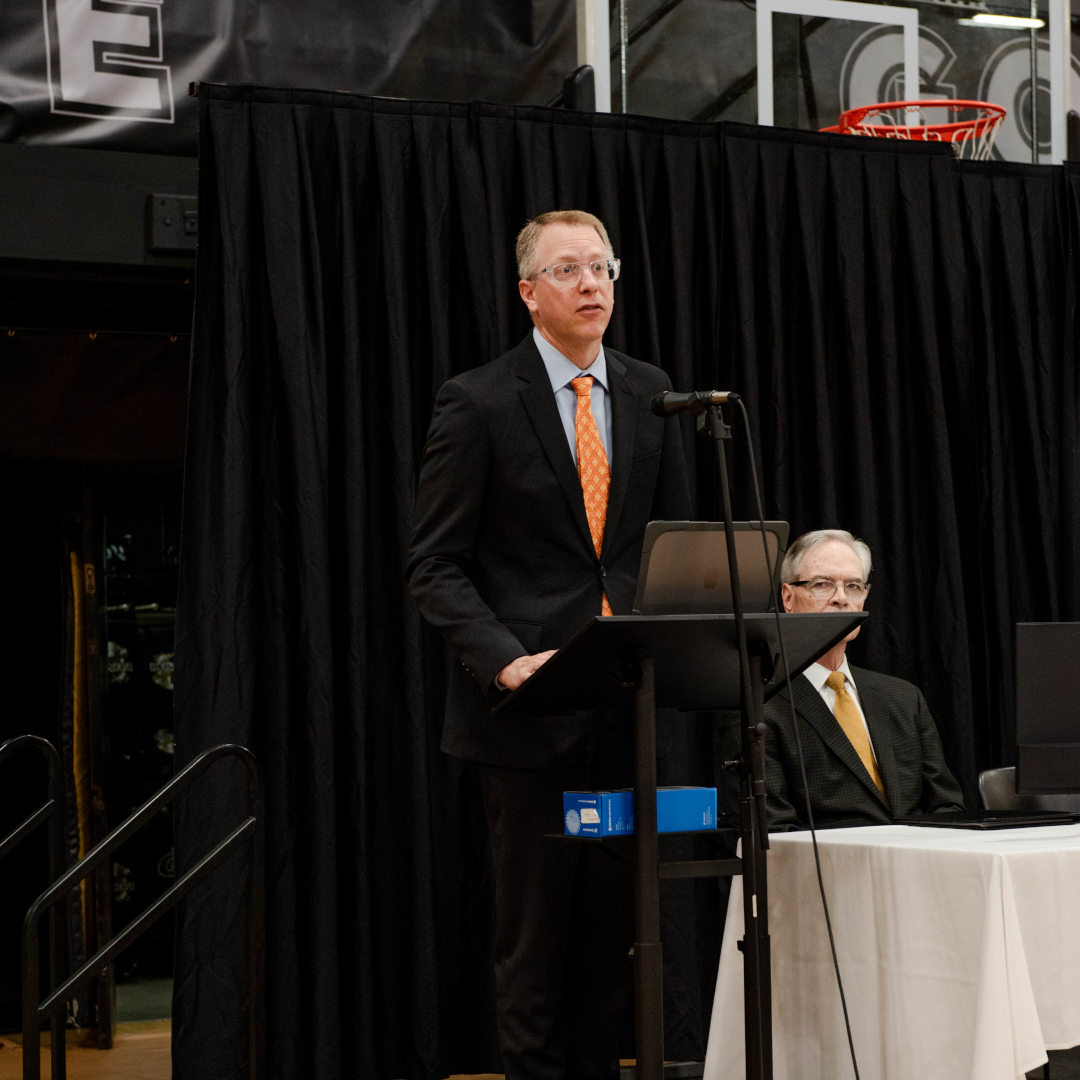
Like several committees throughout the week, the Committee expressed gratitude for the many staff members whose faithful labor makes much of the denomination’s work possible.
Following the report, elections were held. Ruling Elder Gregory DeJong, Rev. John Shaw (Grace OPC, Columbus, OH), and Rev. Richard Ellis (Presbytery of New Jersey and Puerto Rico) were elected to serve.
The report concluded with prayer and thanksgiving for the Committee’s important ministry.
The final major report of the morning came from the Committee on Ecumenicity and Interchurch Relations. Rev. Robert Tarullo (Westminster OPC, Countryside, IL) opened the report by reading Ephesians 2:19–22. Ruling Elder Mark Bube then presented the Committee’s work.
Mr. Bube’s enthusiasm for this ministry is infectious. Having previously served as General Secretary of the Committee on Foreign Missions, his love for Christ, His church, and the advancement of the gospel throughout the world was evident throughout the presentation.
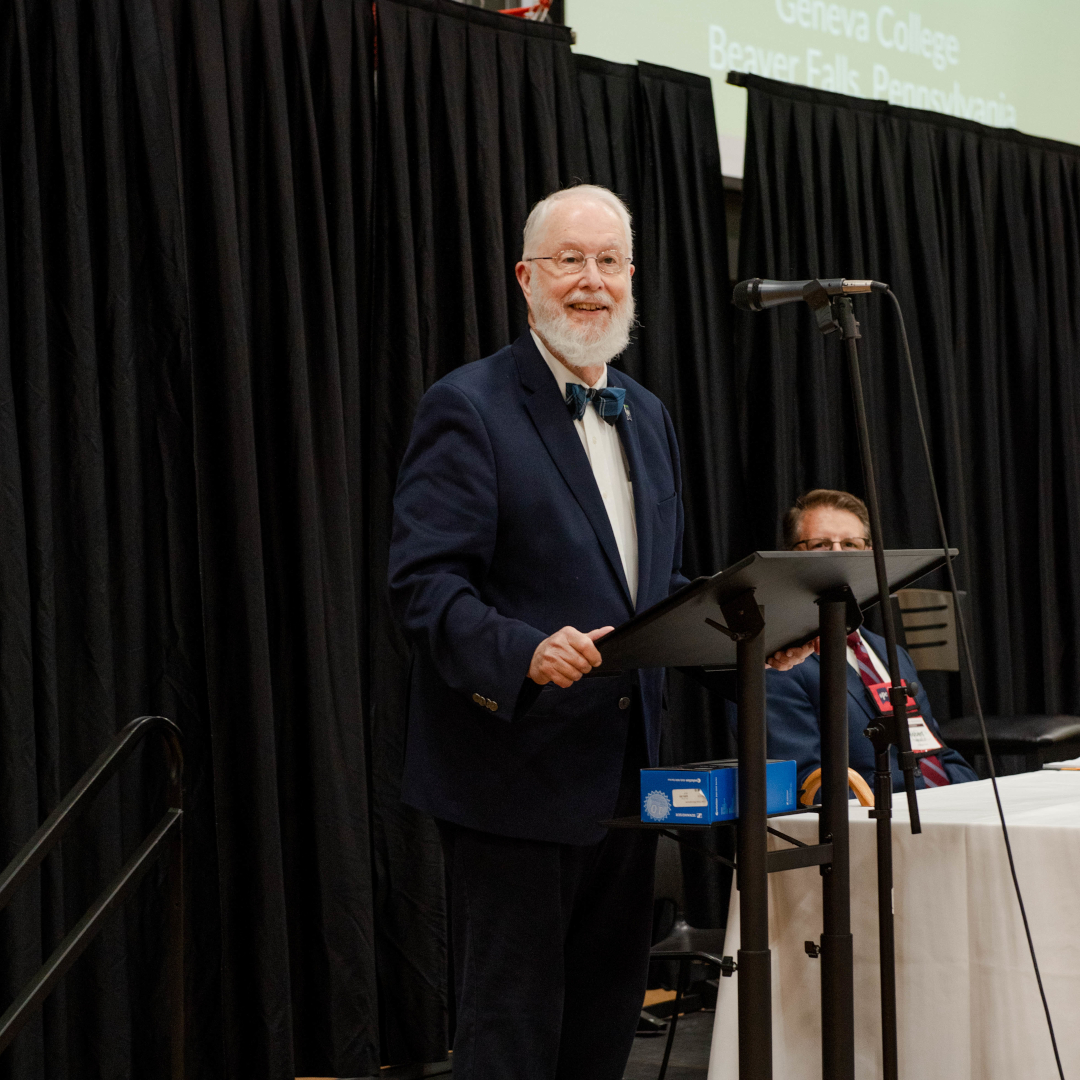
Commissioners heard updates regarding the OPC’s relationships with numerous churches and denominations around the globe. As readers have already seen throughout this week, fraternal delegates play an important role in Assembly life. Many of those relationships are cultivated and maintained through the labor of this Committee.
One of the blessings of being a confessional Presbyterian denomination is that we do not labor alone. The Committee on Ecumenicity and Interchurch Relations helps maintain and strengthen relationships with faithful churches around the world. These relationships allow the OPC to encourage and be encouraged by fellow believers, cooperate in areas of common ministry, receive fraternal delegates, assist in missions efforts, and demonstrate the unity of Christ’s church beyond denominational boundaries.
One of the lesser-known features of OPC history is that ecumenical relationships have been part of the denomination almost from its beginning. Though relatively small in size, the Orthodox Presbyterian Church has maintained meaningful relationships with churches across North America, Europe, Africa, Asia, and Australia. These relationships remind us that Christ’s kingdom is far larger than any one denomination and that faithful Reformed churches throughout the world share a common commitment to Scripture and the gospel. The Assembly approved recommendations supporting the Bible Presbyterian Church’s application for membership in NAPARC.
The Assembly also voted to establish Corresponding Relations with the Evangelical Presbyterian Church of Ukraine and to invite the Universal Reformed Church (NKST) of Nigeria into Corresponding Relations. The Nigerian denomination currently consists of approximately one million members worshiping in roughly five hundred congregations.
At 11:40 a.m. the Assembly recessed for the morning devotional.
Rev. Scott Johnson (Mount Rose Reformed Presbyterian Church, Reno, NV) opened 2 Corinthians 4 and encouraged commissioners to keep their eyes fixed upon Christ.
Reflecting on Paul’s words, he reminded the Assembly that ministers and elders are called to persevere because Christ reigns. Paul did not lose heart because his confidence rested not in circumstances but in the risen and exalted Savior.
Commissioners were reminded that church officers are servants and under-shepherds, called to labor faithfully under the authority of Christ.
The Assembly recessed for lunch following the singing of Hymn 446, “Be Thou My Vision.”
The Assembly reconvened at 1:15 p.m. following lunch with the singing of Psalm 130A and prayer. As has become the rhythm of this Assembly, commissioners first heard from a fraternal delegate before returning to the business before the court. Fraternal Greetings from the Associate Reformed Presbyterian Church.
The Assembly was privileged to hear from Rev. Ben Glaser, fraternal delegate from the Associate Reformed Presbyterian Church (ARPC). Mr. Glaser updated the Assembly on the work and ministry of the ARPC and spoke warmly of the long-standing relationship between our denominations. As many commissioners can attest, Mr. Glaser is a delight to hear in person. His sense of humor, combined with an evident love for Christ and His church, made for an encouraging presentation.
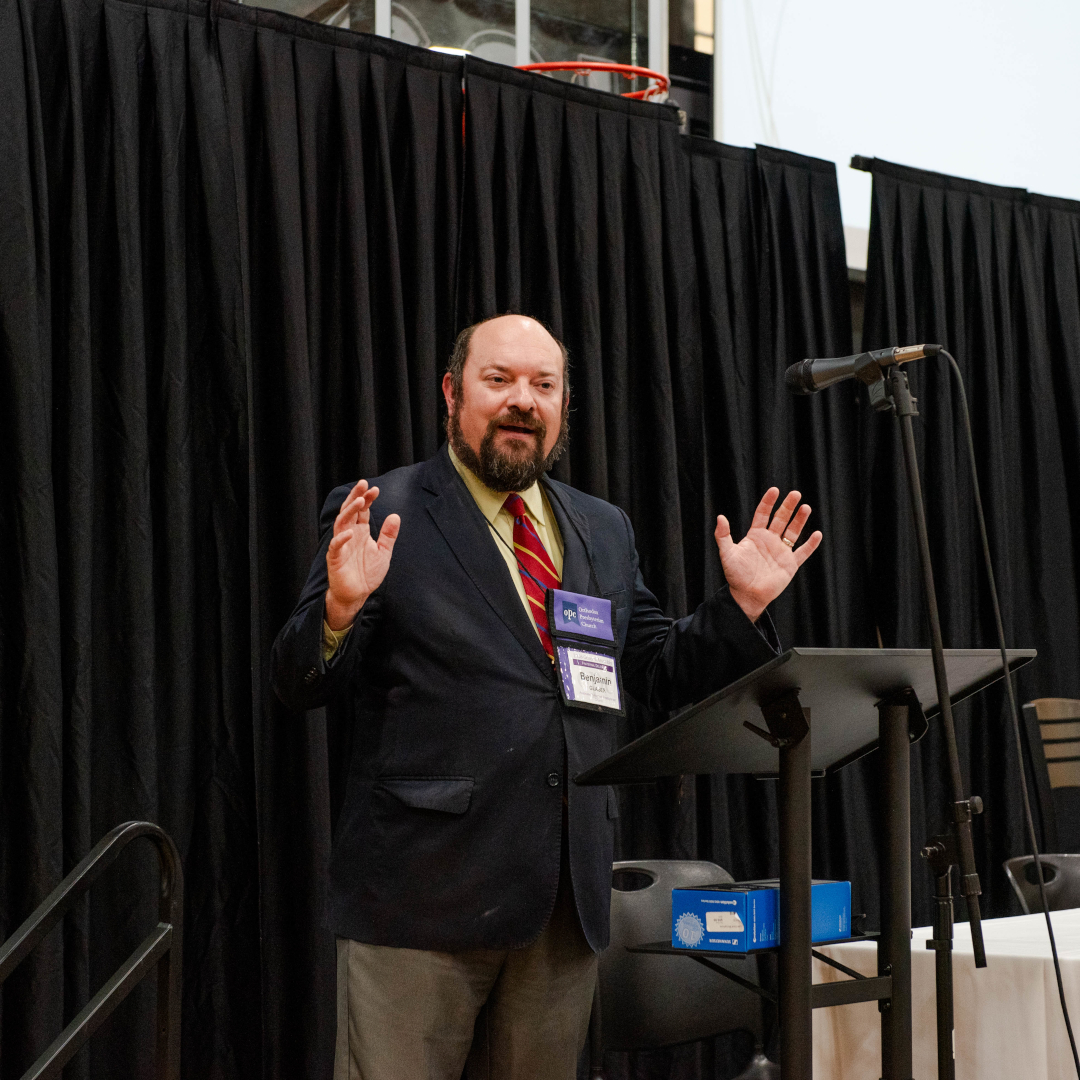
He noted that the ARPC will hold its own General Synod next week and expressed gratitude for the growing commitment to confessional Presbyterianism within the denomination. He also conveyed appreciation for the fellowship enjoyed between the ARPC and OPC and for opportunities to labor together for the advancement of Christ’s kingdom.
The Assembly prayed for our brothers and sisters in the ARPC and gave thanks for the shared gospel witness enjoyed by both denominations.
Following the fraternal address, elections were completed for the Committee on Ecumenicity and Interchurch Relations. Ruling Elder John West and Reverends Chad Van Dixhoorn (Presbytery of the Southeast) and John Nymann (All Saints OPC, Suffolk, VA) were elected to serve. The Committee was thanked and prayed for before the Assembly turned to what would become the most substantial portion of the day’s work.
The Assembly then took up the report of the Committee on Appeals and Complaints.
This Committee carries one of the heaviest responsibilities within the life of the church. Judicial matters frequently involve difficult circumstances, complex constitutional questions, and deeply personal concerns. For that reason, the proceedings of the Assembly during this portion of its work are not publicly livestreamed, and this report will likewise refrain from discussing details that could identify individuals involved in matters before the court.
The Moderator plays an especially important role during judicial proceedings. He helps establish the tone of the discussion, reminds commissioners of their Christian obligations toward one another, and ensures that deliberations proceed in an orderly and constitutional manner.
Those who have never attended a General Assembly are sometimes surprised by the amount of time devoted to appeals and complaints. Yet this work lies near the heart of Presbyterian church government. Because these proceedings are not publicly reported in detail, this provides an opportunity to explain why the process matters so deeply.
One of the most often misunderstood aspects of a Presbyterian General Assembly is the time devoted to appeals and complaints. To some observers, the process can seem slow, technical, and painstakingly deliberate. Yet what may appear cumbersome at first glance is actually one of the great strengths of Presbyterian church government. The system exists not merely to resolve disputes, but to preserve the peace, purity, and unity of Christ’s church.
The Orthodox Presbyterian Church is governed through a series of courts, or judicatories: the session, the presbytery, and the General Assembly. Each court possesses real authority under Christ, but no court is beyond accountability. Presbyterianism has long recognized that because elders are sinners, courts themselves may err. Appeals and complaints provide orderly, biblical means for correcting mistakes while maintaining the church’s unity.
An appeal arises from a judicial case. If a person believes a lower court has rendered an incorrect judgment in a disciplinary matter, he may seek review by a higher court. The purpose is not simply to express dissatisfaction but to ask that the judgment be reviewed and, if necessary, reversed or modified. The Book of Discipline carefully regulates the process, requiring written notice, specifications of error, and a complete record of the proceedings so that the higher court can evaluate the matter fairly. A complaint, by contrast, is directed against an action or decision of a church court that is believed to be erroneous or delinquent. Complaints are not limited to judicial trials. They allow church members, officers, sessions, and presbyteries to seek review of actions taken by a lower court. In this way, Presbyterian government provides a peaceful avenue for redress without resorting to factions, public campaigns, or personal grievances.
When an appeal or complaint reaches the General Assembly, the process is far more careful than many realize. The Assembly does not simply hear speeches and immediately vote. A permanent Committee on Appeals and Complaints first reviews procedural matters. The case is then assigned to an advisory committee composed of commissioners from across the denomination. These advisory committees spend hours examining records, studying the relevant constitutional provisions, discussing the issues, and formulating recommendations. This layered process can feel slow, but slowness is often a virtue in judicial matters. The church is dealing with reputations, ministries, congregations, and sometimes deeply painful conflicts. Hasty decisions may satisfy a desire for speed, but they rarely serve justice. The OPC’s procedures are intentionally designed to ensure that decisions are based on facts, evidence, and constitutional principles rather than emotion or pressure.
The process also reflects an important theological conviction. Christ alone is King and Head of the Church. No individual pastor, elder, congregation, or presbytery possesses unlimited authority. Every court is accountable to higher courts, and every court is accountable to Christ through His Word. Appeals and complaints embody the Presbyterian conviction that authority must always be exercised under law and subject to review.
Perhaps the most beautiful feature of the system is that it provides a way for brothers who strongly disagree to remain brothers. Rather than dividing the church through personal conflict, Presbyterian polity channels disagreements into orderly constitutional processes. Men may vigorously debate a case on the floor of the Assembly and then sing psalms together at the next recess. The goal is not victory over opponents but faithfulness to Christ and peace within His church.
This commitment to careful process is not new. It stands within a long Presbyterian tradition stretching back centuries. Presbyterian churches have historically devoted enormous attention to judicial procedures because they recognized that justice, fairness, and accountability are essential to the church’s health.
One interesting feature of OPC history is that judicial business has occupied a significant place in General Assembly life from the denomination’s earliest years. The founders of the OPC understood that faithfulness requires not only sound doctrine and vigorous missions but also courts capable of administering justice fairly and biblically. For ninety-two General Assemblies commissioners have devoted careful attention to judicial matters because they recognize that Christ cares not only about what His church believes, but also how His church governs itself.
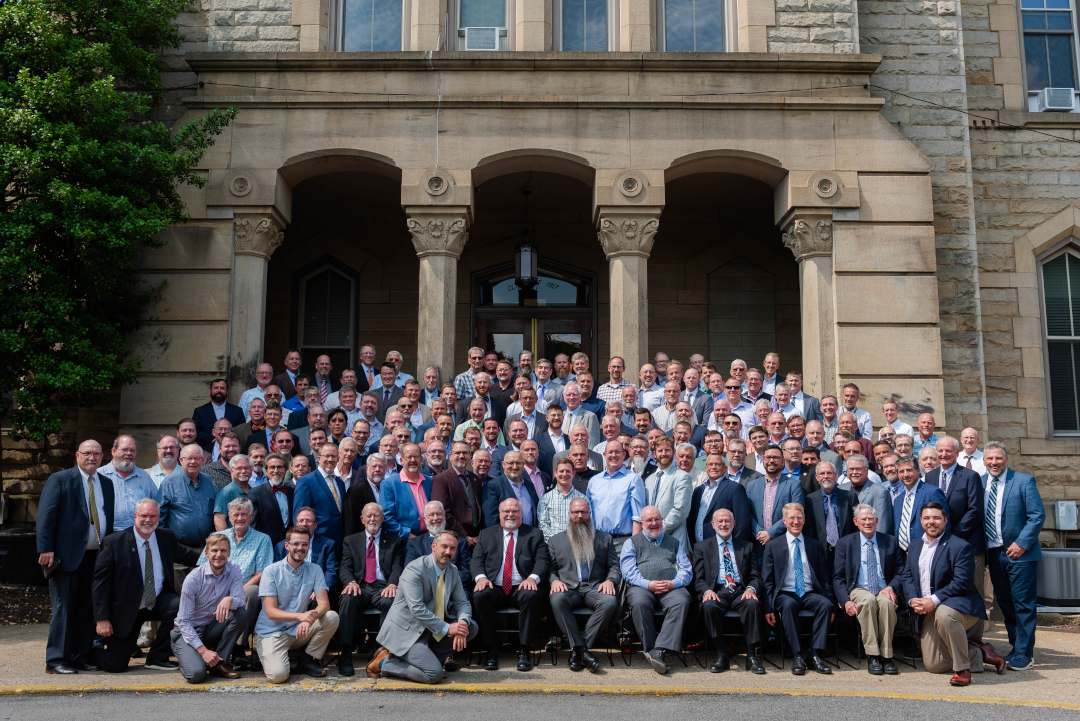
At 3:20 p.m. the Assembly recessed for the annual General Assembly photograph and reconvened at 3:50 p.m.
Upon reconvening, Ruling Elder Mark Bube provided additional information regarding the Universal Reformed Church (NKST) in Nigeria that had been referenced earlier in the day.
One of the most moving moments of the Assembly occurred Friday afternoon as commissioners learned more about the suffering of believers in Nigeria.
The Assembly was informed that more than six thousand members of the NKST church have reportedly been murdered in recent months by Islamic militants. The number itself is difficult to comprehend.
A video presentation provided a sobering glimpse into the reality facing many believers. Yet what stood out most was not despair, but joy. Again, and again commissioners witnessed brothers and sisters whose confidence remained firmly fixed upon Christ despite suffering that few in the West can imagine.
The darkness fights hard against the Light.
Yet the church remains.
One could not help but be reminded that while Christians in North America often wrestle with distraction, comfort, and complacency, many believers throughout the world gather each Lord’s Day knowing that faithful worship may come at great personal cost. It is often said that the church in the West struggles with comfort while the church in many parts of the world struggles with persecution. Friday’s report from Nigeria reminded the Assembly that while circumstances differ, Christ remains faithful to His people in every place. The same Savior who gathers His church in comfortable sanctuaries throughout North America is gathering His people in villages threatened by violence and persecution.
Their witness served as both an encouragement and a challenge.
Please pray for these dear brothers and sisters.
Pray for protection.
Pray for perseverance.
Pray that Christ would continue to build His church in Nigeria.
Pray also that the Lord would restore to us a greater zeal for worship, prayer, evangelism, and faithful participation in the life of the church.
Rev. Benjamin Hopp (General Secretary for Foreign Missions, Gainesville, FL) then led the Assembly in a heartfelt prayer for the church in Nigeria.
Following prayer, judicial business resumed.
Because Moderator Everett Henes serves on the Committee on Appeals and Complaints, he had previously ceded the chair during these proceedings. Rev. Brian DeJong (Grace OPC, Sheboygan, WI) therefore continued to serve as Moderator Pro Tempore throughout this portion of the Assembly’s work.
As deliberations continued, commissioners were again reminded to exercise Christian charity and discretion regarding sensitive matters before the court.
When people hear that the General Assembly is considering an appeal or a complaint, it is easy to imagine something adversarial or contentious. Yet within Presbyterian church government, appeals and complaints are not signs that the system is failing. They are evidence that the system is working exactly as intended.
One of the great strengths of Presbyterianism is that no individual court of the church possesses absolute authority. Sessions are accountable to presbyteries. Presbyteries are accountable to the General Assembly. Every court of the church remains subject to the Word of God and the church’s constitution.
The Orthodox Presbyterian Church has embraced this principle from its earliest days. When the denomination was organized in 1936, one of the first responsibilities of the young church was establishing constitutional procedures by which disagreements could be reviewed and decisions examined.
The founders understood that faithful churches need more than sound doctrine; they also need orderly and biblical ways to resolve disputes when they arise.
An appeal occurs when a person believes that a church court has reached an incorrect judicial decision and asks a broader court to review the matter. A complaint differs slightly in that it challenges an action or decision of a church court itself. In both cases, the purpose is not victory for one side and defeat for another. The purpose is to determine whether the church has acted faithfully according to Scripture and the Constitution of the OPC.
What many church members never see is the extraordinary amount of work that takes place before these matters ever reach the floor of the General Assembly. Advisory committees often spend many hours reviewing extensive records, testimony, and documentation. By the time recommendations come before the Assembly, commissioners have already devoted significant effort to understanding the issues involved. The process can sometimes appear slow. Deliberations may be lengthy. Records can be substantial. Yet that deliberate pace is intentional. The church is dealing with matters that affect reputations, consciences, congregations, and sometimes entire presbyteries. Quick decisions are not always the wisest decisions.
Perhaps the most remarkable feature of the system is that even the General Assembly itself is not a supreme authority in the absolute sense. Unlike a civil supreme court, the Assembly cannot invent new doctrine or exercise unlimited power. It remains bound by Scripture and the church’s adopted standards.
Every court in the church stands under the authority of Christ, the King and Head of the Church.
That reality helps explain why the OPC’s judicial process is often careful, measured, and patient. What may at times feel slow and painstaking is actually an expression of a deeply biblical conviction: Christ governs His church through His Word, and therefore the church must proceed thoughtfully whenever it judges difficult matters.
For that reason, appeals and complaints should never be viewed merely as procedural necessities. They are among the means Christ has provided to preserve justice, promote accountability, and maintain confidence in the courts of His church.
The Assembly recessed at 5:15 p.m. for dinner. Once again, the staff of Geneva College demonstrated remarkable hospitality and care in serving commissioners throughout the week.
The Assembly reconvened in the evening with singing and prayer.
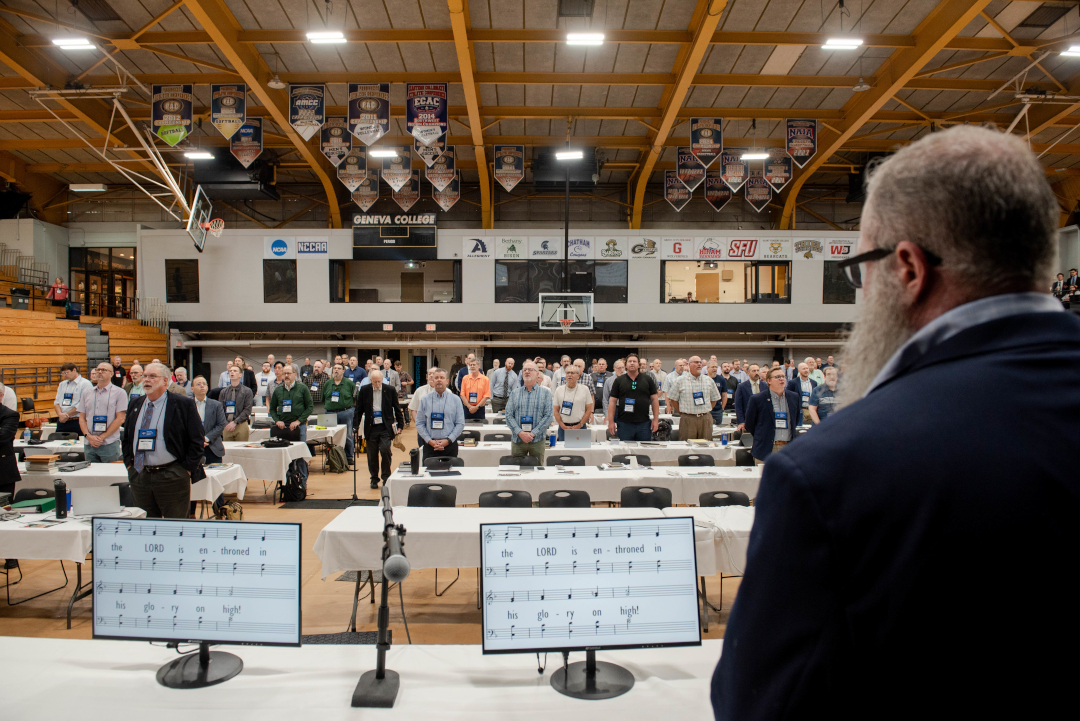
As has become customary throughout the week, commissioners first heard from a fraternal delegate before returning to the docket. Fraternal Greetings from South Africa.
Rev. Gerben Meijer addressed the Assembly on behalf of the Reformed Churches in South Africa (GKSA).
Rev. Meijer spoke of efforts within the GKSA to reaffirm and strengthen confessional Christianity amid the many challenges facing churches in modern society. He expressed gratitude for the long-standing relationship between the GKSA and the OPC and spoke warmly of opportunities for mutual encouragement and cooperation.
He emphasized the importance of remaining steadfast in the faith once delivered to the saints and thanked the OPC for standing alongside fellow Reformed churches throughout the world in contending for biblical truth.
The Assembly prayed for the churches of South Africa, asking the Lord to sustain them in faithfulness and to raise up young men for the ministry of the gospel.
Following the fraternal address, the Assembly resumed consideration of matters before the Committee on Appeals and Complaints. As throughout the day, commissioners approached the work carefully and deliberately. Judicial matters rarely generate headlines, yet they often reveal some of the most important principles of Presbyterian church government: accountability, humility, patience, and submission to the authority of Christ.
The proceedings continued into the evening before the Assembly finally recessed.
Friday’s docket demonstrated the remarkable breadth of the church’s work.
Commissioners considered Christian education, mercy ministry, care for ministers, relationships with churches around the world, and the careful administration of justice. Reports arrived from Australia, Ukraine, Nigeria, South Africa, and sister denominations here in North America. We heard of young men entering the ministry through the Timothy Conference, churches gathering amid war, believers persevering under persecution, and officers laboring faithfully in the courts of Christ’s church.
Through every report and discussion, one truth remained evident:
Christ continues to build His church.
The same Lord who sustains believers worshiping amid war in Ukraine, strengthens saints suffering persecution in Nigeria, raises up future ministers through the Timothy Conference, and guides the courts of His church through difficult judicial matters remains seated upon His throne.
The Ninety-Second General Assembly recessed at 8:00 p.m. Friday evening and will reconvene Saturday morning at 8:30 a.m. We ask the churches to continue praying for wisdom, humility, charity, and faithfulness as commissioners seek to conduct the business of Christ’s church under the authority of His Word and for the glory of His name.
The Ninety-Second General Assembly of the Orthodox Presbyterian Church reconvened Saturday morning at 8:30 a.m. under the leadership of Moderator Henes. Commissioners began the day with a rousing rendition of Psalm 29A before returning to the work of the Assembly.
The Assembly was first greeted by Rev. Jeffrey Temple, fraternal delegate from the Canadian and American Reformed Churches. Rev. Temple reported on the life and ministry of his churches and highlighted what has become a recurring theme throughout the week. Like many of our own committees and several of our sister denominations around the world, the Canadian and American Reformed Churches face a growing need for ministers of the gospel. The shortage of men called and trained to preach the Word has constrained opportunities for expansion and church planting. He spoke of the work being done through their seminaries in Canada and expressed deep appreciation for the longstanding friendship and fellowship shared between his churches and the OPC.
The Assembly then resumed consideration of the report of the Committee on Appeals and Complaints. Because the judicial matter before the Assembly involved a complaint arising from the Moderator Pro Tempore’s own presbytery, both the Moderator and Moderator Pro Tempore recused themselves from the chair. Former Moderator Mr. David Nakhla presided during the judicial proceedings. As is required whenever the General Assembly sits in a judicial capacity, Mr. Nakhla read the solemn warning found in the Book of Church Order:
This body is about to sit in a judicial capacity, and I exhort you, the members, to bear in mind your solemn duty faithfully to minister and declare the Word of God, the only infallible rule of faith and practice, and to subordinate all human judgments to that infallible rule.
This admonition is read each time the Assembly reconvenes to continue judicial business and serves as a reminder that the church’s courts are not governed by personal preference or majority opinion, but by the authority of Christ speaking through His Word. The Assembly recessed briefly at 10:00 a.m. and reconvened at 10:20 a.m. with prayer and song.
Mr. Mark Bube then introduced Ruling Elder Chris Boersema of the Igrejas Reformadas do Brasil (Reformed Churches of Brazil). Mr. Boersema offered warm greetings to the Assembly and lightheartedly expressed gratitude that the United States was hosting the World Cup, while also noting his expectation that Brazil would ultimately win it. His remarks drew smiles throughout the Assembly. Having served in the OPC for many years before moving to Brazil, Mr. Boersema spoke warmly of the continued relationship and close fellowship enjoyed between our churches. Prayer was offered for the churches and ministries in Brazil.
The remainder of the day was largely devoted to appeals and complaints. As this work continues, however, it may be helpful to provide readers with a broader introduction to some of the fraternal churches represented through the Committee on Ecumenicity and Interchurch Relations. One of the most encouraging aspects of General Assembly is the reminder that the Orthodox Presbyterian Church is part of a much larger communion of faithful Reformed churches around the world.
The Presbyterian Church in America (PCA) is the largest conservative Presbyterian denomination in North America, formed in 1973. Though substantially larger than the OPC, the two churches enjoy warm fraternal relations and share a common commitment to the Westminster Standards, Reformed theology, and Presbyterian church government. Cooperation between the denominations frequently occurs in missions, theological education, and church planting.
The Associate Reformed Presbyterian Church (ARPC), founded in 1782, is the oldest Presbyterian denomination in the United States. Rooted in the Scottish Covenanter tradition, it maintains a strong commitment to confessional Presbyterianism and historic Reformed worship. The ARPC has long been a valued partner through the North American Presbyterian and Reformed Council (NAPARC).
The Reformed Presbyterian Church of North America (RPCNA) traces its heritage to the Scottish Covenanters who suffered persecution for their commitment to Christ’s kingship over both church and nation. The denomination is particularly known for its historic practice of exclusive psalmody and its steadfast commitment to biblical authority.
The Free Reformed Churches of North America (FRCNA) emerged from Dutch Reformed immigrants who settled in North America during the twentieth century. Their churches are marked by reverent worship, experiential Calvinism, and faithful preaching. The OPC has enjoyed decades of close fellowship with these congregations.
The Evangelical Presbyterian Church in England and Wales (EPCEW) represents a small but faithful witness for confessional Presbyterianism within the United Kingdom. In a culture increasingly indifferent to Christianity, these congregations continue to labor faithfully in preaching, discipleship, and church planting.
The Reformed Churches of South Africa (GKSA), founded in 1859, are known throughout the Reformed world for theological scholarship and steadfast adherence to the Three Forms of Unity. Their relationship with the OPC spans many decades.
The Presbyterian Church of Uganda (PCU) reflects the growing strength of confessional Presbyterianism in East Africa. Through indigenous leadership and gospel ministry, these churches continue to grow and bear witness to Christ in a rapidly changing region. The Universal Reformed Christian Church of Nigeria (URCCN) serves within one of the most vibrant centers of Christianity in the world. Its commitment to biblical authority and Presbyterian polity demonstrates the continuing spread of confessional Reformed theology throughout West Africa.
The Bible Presbyterian Church (BPC) shares historical roots with the OPC, both denominations emerging from the broader Presbyterian controversies of the 1930s. Though the two churches developed along different paths, they continue to enjoy warm relations and significant theological commonality.
The Reformed Church in the United States (RCUS) is the oldest Reformed denomination in North America, tracing its roots to German Reformed immigrants during the colonial era. Though relatively small in size, it remains confessionally robust and deeply committed to the Heidelberg Catechism, Belgic Confession, and Canons of Dort.
The Evangelical Reformed Church Westminster Confession (ERKWB), based primarily in Europe, maintains a commitment to the Westminster Standards and reflects the OPC’s ongoing concern for strengthening international Presbyterian cooperation.
The Reformed Presbyterian Church of Central and Eastern Europe serve churches in regions once heavily shaped by communist rule and religious suppression. Its continued growth stands as a powerful testimony to the enduring advance of the gospel.
These relationships matter because they remind us that the OPC is not an isolated denomination. Through the work of the Committee on Ecumenicity and Interchurch Relations, commissioners hear reports from faithful brothers laboring throughout Africa, Europe, Asia, and North America. These partnerships provide opportunities for mutual encouragement, theological accountability, missionary cooperation, and visible expressions of the unity Christ has given His church. In an age often marked by fragmentation, the gathering of fraternal delegates offers a beautiful glimpse of the worldwide communion of Reformed churches united around the gospel of Jesus Christ. Having reached the order of the day, the Assembly received the scheduled devotional from Rev. Todd Smith (Covenant OPC, Coeur d’Alene, Idaho), who preached from 1 Corinthians 11:2–16. Mr. Smith spoke about biblical headship, creation order, and the differing roles of men and women in both the church and the broader world. He acknowledged the varying interpretations that have surrounded this passage throughout church history, while reminding commissioners that Paul addressed a contentious congregation and that believers should seek unity and charity even amid difficult discussions.
The Assembly recessed for lunch at 12:05 p.m. Commissioners enjoyed a meal of pulled pork, salads, and numerous side dishes. Throughout the week Geneva College and its staff have demonstrated remarkable hospitality. The attentiveness of the staff and the quality of the meals have been greatly appreciated by all in attendance. On a personal note, the grasshopper pie ice cream may deserve recognition as one of the finest desserts served during any General Assembly in recent memory.
The Assembly reconvened in the afternoon and received greetings from Ruling Elder Dennis Luquette of the Reformed Church in the United States. Mr. Luquette provided updates regarding developments within the RCUS, including potential revisions to portions of their Book of Church Order. He also expressed appreciation for the leadership role the OPC continues to play within the broader Reformed community and shared encouraging reports regarding mission opportunities developing in both Kenya and Mexico. Prayer was offered for the churches and ministries of the RCUS.
Following Mr. Luquette’s remarks, the Assembly returned to the business of appeals and complaints.
For readers observing the Assembly from afar, much of what takes place on the floor is framed by parliamentary procedure. Understanding that process helps explain why so much of the Assembly’s work unfolds through motions, amendments, and procedural votes.
Henry Martyn Robert, author of Robert’s Rules of Order, was a United States Army engineer who discovered while presiding over a church meeting that many organizations lacked a common method for conducting business. His efforts eventually produced the parliamentary manual now used by countless churches, civic organizations, and deliberative assemblies throughout North America. Anyone attending General Assembly quickly hears phrases such as “I move,” “second,” “point of order,” “divide the question,” or “call the question.” To newcomers, it can seem like learning an entirely new language.
The OPC uses Robert’s Rules not because Scripture prescribes a parliamentary manual, but because Scripture teaches that “all things should be done decently and in order” (1 Cor. 14:40). Parliamentary procedure provides a practical framework that allows hundreds of commissioners to discuss important matters while ensuring that every commissioner has an opportunity to participate.
One helpful illustration is that of a busy intersection. Traffic lights are not installed because drivers are untrustworthy; they exist because many people are attempting to move through the same space safely and efficiently. Without agreed-upon rules, confusion quickly follows. Robert’s Rules serve a similar purpose. They provide an orderly process for discussion, debate, amendment, and decision-making.
The process itself is often simpler than it appears. A commissioner makes a motion. Another commissioner seconds it. Discussion follows. Amendments may be proposed. Questions may be asked. Eventually the Assembly votes. The goal is not bureaucracy for its own sake but thoughtful deliberation before action.
At times the process can feel slow. Yet that deliberateness is one of its greatest strengths. Matters affecting the peace, purity, and unity of Christ’s church deserve careful consideration. Parliamentary procedure protects minority viewpoints, prevents domination by a few voices, and helps ensure that decisions are reached openly, fairly, and transparently.
To first-time observers, General Assembly may occasionally resemble a carefully choreographed dance. Beneath all the motions and procedural language lies a simple objective: helping Christ’s church conduct its business in an orderly and charitable manner. After a brief recess at 3:15 p.m., Moderator Henes reconvened the Assembly and welcomed one of the OPC’s longtime friends, Rev. Dr. Kevin Backus of the Bible Presbyterian Church. Dr. Backus has attended many OPC General Assemblies as a fraternal delegate and consistently brings warmth, encouragement, and good cheer to the proceedings. He expressed gratitude for the OPC’s support of the BPC’s admission into NAPARC and reflected on the continuing fellowship enjoyed between the two denominations.
As with every General Assembly, much of the work accomplished throughout the week never appears in final vote totals or headlines. Advisory committees labor through reports and recommendations. Officers prepare materials. Clerks record proceedings. Commissioners devote countless hours to study, prayer, discussion, and deliberation. Though largely unseen, these efforts form an essential part of the Assembly’s effectiveness and service to Christ’s church.
The Assembly recessed at approximately 5:15 p.m. on Saturday afternoon. In keeping with the church’s practice, no business will be conducted on the Lord’s Day. Commissioners will worship with local congregations throughout western Pennsylvania, enjoy fellowship with brothers and sisters in Christ, and prepare for the final sessions of the Assembly beginning Monday morning.
The early recess also provided an opportunity to honor Mr. Douglas Clawson upon his retirement after many years of faithful service through the Committee on Foreign Missions. A formal resolution of thanks was adopted by the Assembly recognizing Douglas' decades of labor on behalf of the church’s worldwide missionary efforts. Douglas has long been a beloved brother whose zeal for Christ, love for the lost, and commitment to the advancement of the gospel have blessed the Orthodox Presbyterian Church in countless ways. While retirement marks the conclusion of this particular chapter of service, the fruits of his labor will continue to be seen for years to come. We give thanks to God for Douglas' faithful stewardship and pray the Lord’s richest blessings upon him in the years ahead. He will be greatly missed.
As we pause for the Lord’s Day, we are reminded that the work of Christ’s church does not ultimately depend upon committees, reports, motions, or assemblies. The church belongs to her risen King, who continues to build His kingdom through the ordinary means of grace. We look forward to reconvening on Monday and completing the remaining work of the Ninety-Second General Assembly.
A wonderful day of rest and worship was enjoyed by all. Many local Orthodox Presbyterian congregations warmly welcomed commissioners into their pulpits and pews, while others worshiped with nearby congregations of the Reformed Presbyterian Church in North America and the Presbyterian Church in America. We are grateful for the generous hospitality shown throughout western Pennsylvania, where congregations opened not only their doors, but also, tables of wonderful food, warm hospitality, leaving not only stomachs full, but also hearts and souls.
At 6:00 p.m., commissioners and local congregations gathered together for a joint evening worship service. Rev. Jeremy Jones of Covenant OPC in Grove City, Pennsylvania, brought the Word and encouraged the saints in Christ.
The Sabbath provides a fitting reminder in the midst of General Assembly that the church does not ultimately depend upon motions, reports, committees, or debates. The church belongs to Jesus Christ. While the Assembly labors diligently in the service of Christ’s kingdom, the Lord’s Day calls commissioners to set aside those labors and rest in the finished work of their Savior.
Following Saturday’s recess and a blessed Lord’s Day of worship, the Ninety-Second General Assembly reconvened at 8:30 a.m. Moderator Everett Henes called the Assembly to order with the singing of Psalm 148B and prayer.
Mr. Mark Bube, chairman of the Committee on Ecumenicity and Interchurch Relations, introduced the Assembly’s fraternal delegate from the Reformed Churches of New Zealand, Rev. Aaron Warner. Rev. Warner brought warm greetings from our brothers and sisters in New Zealand and quickly put to rest one popular misconception, noting that there are, in fact, no hobbits living there.
Rev. Warner reported that the Trinity Psalter Hymnal was approved for use in his denomination at its most recent synod. Like many churches throughout the world, the Reformed Churches of New Zealand face increasing pressure from a culture growing ever more distant from biblical Christianity. Restrictions on so-called conversion therapy and growing legal hostility toward biblical teaching on sexuality have created new challenges for faithful ministry. Yet Rev. Warner reminded the Assembly that the gospel continues to advance and that Christ’s Word still goes forth to every tribe and tongue.
The principal business of the day involved the consideration of overtures before the Assembly returned to the work of the Committee on Appeals and Complaints.
One of the distinctive features of Presbyterian church government is the use of overtures. An overture is simply a formal request from a lower court of the church to a higher court asking it to take some action. Most often in the Orthodox Presbyterian Church, a presbytery sends an overture to the General Assembly requesting constitutional changes, studies, statements, or other actions within the Assembly’s authority.
The language Presbyterians use is instructive. The Assembly does not ordinarily approve an overture. Rather, it grants an overture. The overture itself is a request. The Assembly’s task is to determine whether the request should be granted, answered in another form, referred elsewhere, or denied.
The process can seem slow, but that deliberateness serves an important purpose. Overtures are considered by local churches, debated in presbyteries, studied by advisory committees, and finally examined by the General Assembly. Significant changes are intentionally tested through multiple layers of prayerful deliberation. In Presbyterianism, that slowness is not a weakness but one of the safeguards intended to preserve the peace, purity, and unity of the church.
The Assembly first considered Overture 1 from the Presbytery of the Southwest concerning Christian Nationalism. Much of the debate centered on the necessity of such a study committee and on defining the scope of its work carefully and narrowly. After considerable discussion, the Assembly granted the overture and established a special committee of five members with two alternates and a budget of $10,000:
That the 92nd General Assembly form a special committee of five with two alternates with a budget of $10,000 to study matters pertaining to the proper biblical and confessional understanding of how the church relates to the state, with particular attention to teachings commonly called Christian Nationalism, with a view to giving a clear statement to assist the presbyteries, sessions, and members of the church in their understanding of these important matters, reporting back to the 94th General Assembly.
The Assembly then proceeded to elect members to the committee. Elected were Ministers David VanDrunen, (Professor at Westminster Seminary California); Alan Strange, (President of Mid-America Reformed Seminary); Lane Tipton (Trinity OPC, Easton, Pennsylvania); Ruling Elder Daryl Hart (Hillsdale OPC, Hillsdale, Michigan); and David Innes of (Calvin OPC, Phoenix, Arizona). Elected as alternates were Ruling Elder Zachary Lautenschlager (Berean OPC, Clearfield, Utah), and Rev. David Noe (Reformation OPC, Grand Rapids, Michigan.) The Assembly then turned its attention to Overture 2 from the Presbytery of Philadelphia concerning Kinism and Ethno-racism.
Debate was interrupted by the morning recess at 10:00 a.m. The Assembly reconvened at 10:20 a.m. with singing. Mr. Bube introduced Rev. Peter Szabo, fraternal delegate from the Reformed Presbyterian Church of Central and Eastern Europe.
Rev. Szabo described the relationship between his denomination and the Orthodox Presbyterian Church as that of a younger brother supported and encouraged by an older brother. Based in Hungary, he asked the Assembly to pray that the Lord would raise up men desirous of serving in the gospel ministry. The OPC enjoys full ecclesiastical fellowship with this small but faithful Reformed denomination and has assisted through short-term mission efforts and diaconal support over the years.
His remarks served as a helpful reminder of the value of short-term mission work. Such opportunities often bless not only those being served but also those who go, providing a firsthand glimpse of Christ’s work throughout the world and strengthening the bonds that unite Reformed believers across national boundaries.
The Assembly joined in prayer for the churches of Central and Eastern Europe before returning to Overture 2.
The order of the day interrupted deliberations at 11:40AM as Rev. Tyler Freire (Redeemer OPC in Dayton, Ohio), delivered the Assembly devotional from Luke 15:1–7. Rev. Freire emphasized the compassion of Christ toward lost sinners and reminded commissioners of the church’s calling to seek the lost. Just as the Good Shepherd pursues wandering sheep, so Christ’s people are called to proclaim the gospel, sow the seed faithfully, and trust the Lord of the harvest to bring forth fruit in His appointed time.
Following the lunch recess, the Assembly reconvened at 1:15 p.m. with the singing of Psalm 98A.
The afternoon began with greetings from Rev. John McCabe of the Evangelical Presbyterian Church in England and Wales. Speaking with warmth, affection, and a distinctly Welsh accent, Rev. McCabe described the close relationship between the EPCEW and the OPC. Though facing many of the same cultural pressures experienced throughout the Western world, the denomination has seen encouraging developments, including new church plants in several cities throughout the United Kingdom and Europe. The Assembly prayed that the Lord would continue to bless these efforts and strengthen the bonds of fellowship between our churches.
After several administrative matters, including the approval of minutes already taken during the Assembly, deliberations resumed on Overture 2.
Following extensive debate, the Assembly granted the first portion of the overture, joining sister denominations in publicly affirming:
That the 92nd General Assembly join with our sister churches from the North American Presbyterian and Reformed Council, our brothers in the Associate Reformed Presbyterian Church, the Reformed Presbyterian Church in North America, and the Presbyterian Church in America in their public commitment to condemn without distinction any theological or political teaching which posits a superiority of race or ethnic identity born of immutable human characteristics and call to repentance any who would promote or associate themselves with such teaching, either by commission or omission.
The Assembly then considered the second portion of the overture, which requested the formation of a study committee of five members with two alternates and a budget of $10,000 to study all forms of racial prejudice and related matters and report to the Ninety-Third General Assembly. Elections for this committee will be conducted later on Tuesday to keep the follow of business moving this evening. The Assembly next considered Overture 3, which was ultimately denied.
Attention then turned to Overture 4 from the Presbytery of the Dakotas regarding concerns raised about Ordained Servant. During the discussion, Rev. Danny Olinger, General Secretary of the Committee on Christian Education, and Rev. Craig Troxel, President of the Committee on Christian Education, addressed the Assembly with humility and grace. The discussion served as a helpful reminder that even in disagreement, the church must strive to conduct itself with charity, patience, and mutual respect. Following debate, the Assembly denied the overture.
After an afternoon recess at 3:15 p.m., the Assembly reconvened and received greetings from Rev. Kurt Vetterli, fraternal delegate from the Evangelical Reformed Church Westminster Confession in Austria and Switzerland. Rev. Vetterli noted the privilege of living in lands closely associated with the Protestant Reformation while also acknowledging how greatly those lands have changed over the centuries. Yet his report was marked by hope and confidence that the Lord continues to build His church. We were reminded once again of the great blessing it has been throughout the week to hear from faithful brothers laboring in many corners of the world.
The Assembly then heard the reports of Advisory Committees 12 and 13 concerning the review of minutes from presbyteries and standing committees.
One of the less visible but vitally important responsibilities of every General Assembly is the review of minutes. Minutes serve as the official record of the church’s actions and decisions. Through this review process, the Assembly helps ensure that business has been conducted faithfully and constitutionally.
Reviewers may recommend either notations or exceptions. A notation is an observation or suggestion for improvement and does not indicate constitutional error. An exception is more serious and indicates that a constitutional requirement was not followed or that an action appears contrary to the church’s constitution.
While this work receives little public attention, it is one of the ways Presbyterianism practices accountability and preserves institutional memory. Just as careful financial records protect an organization, careful minutes help protect the church and provide a trustworthy record for future generations.
The advisory committees 12 and 13 recommended approval of the minutes as reviewed, together with the various notations and exceptions identified during the review process. The Assembly approved the recommendations by common consent and offered prayer in thanksgiving for the diligent work of presbytery clerks and clerks of the Standing Committees of the General Assembly.
Having completed the work of the overtures at approximately 4:30 p.m., Moderator Henes ceded the chair to former Moderator David Nakhla as the Assembly resumed consideration of the report of the Committee on Appeals and Complaints.
As noted in previous reports, these matters frequently involve sensitive pastoral and judicial concerns affecting individuals, congregations, and presbyteries. For that reason, this report will not address the particulars of the cases under consideration. We encourage the church to pray for all involved and for the wisdom, charity, and faithfulness of the Assembly as it seeks to administer justice according to God’s Word.
Following a dinner recess, the Assembly heard greetings from its final fraternal delegate, Rev. Matt Filbert of the Reformed Presbyterian Church in North America. Rev. Filbert expressed gratitude for the longstanding friendship between our denominations and requested prayer for the RPCNA’s upcoming Synod. He noted that his denomination has likewise had to address difficult issues involving race realism and related matters in recent years. Prayer was offered for our brothers and sisters in the RPCNA and in thanksgiving for their hospitality here at Geneva College.
The Assembly then returned to the work of Appeals and Complaints, continuing into the late evening hours. The matters considered weighed heavily upon the hearts of commissioners. We pray that all who received admonitions, corrections, or relief through the actions of the Assembly would receive them with humility, faith, and confidence in the mercy of Christ.
The Assembly recessed for the evening at 11:30 p.m.
The Assembly reconvened at 8:15 a.m. with singing and prayer. Moderator Henes brought us back to the continuing business of Appeals and Complaints having the last appeal heard and then finishing up the last of the reports.
Two protests on actions taken at the assembly were filed. In Presbyterian church courts, a protest is a formal written statement by one or more members of the body expressing their disagreement with an action that has been taken by the court.
Unlike debate before a vote, a protest comes after the court has acted. The protesting members are not attempting to reverse the decision through the protest itself. Rather, they are placing on record the reasons they believe the action was wrong, unconstitutional, unwise or unjust. They allow minority voices to be heard and preserved in the record while still respecting the authority of the court’s final decision.
As we closed the business of the Committee on Appeals and Complaints we moved to elections. Ministers Scott Willet (Covenant Reformed, Mt. Airy, NC) and Josh McKamy (Redemer OPC, Danville, PA) were elected to the committee. Rev. Todd Dole (PSW) elected as the alternate. An interesting item to note is due to the rules of the committee only 1 person in a presbytery can be on the committee at the same time.
Following the election and prayer we heard the report of the Committee on Chaplains and Military Personnel. This committee does a tremendous job of supporting those who serve the Lord and country. It was a very encouraging report. The Lord is sustaining our men at home and abroad. Following the report we elected Rev. John Carter (Assistant Professor, Trinity Evangelical Divinity School) and Ruling Elder Peter Spaulding (Grace and Peace OPC, California, MD). The committee was prayed for.
The Historian and the Committee for the Historian reported. A brief presentation of those graduated to Heaven in the last year was given. Mr. Olinger (POH) and Ruling Elder John Meuther (Presbytery of the South) were re-elected to the committee. Prayer was offered for the work of the Historian and the church as a whole.
The Special Committee to Review the Form of Government and Church Discipline reported and will report back to the 93rd General Assembly. Prayer was given for the committee and for the great work before them and for them to have wisdom as they work. Committee on Arrangements reported that the 93rd General Assembly will be held Wednesday, June 9, 2027 to Tuesday, June 15, 2027 in Greenville, SC on the campus of Furman University. Rev. Joesph Troutman (Mid-Cities Presbyterian, Bedford TX) and Ruling Elder David Mahaffy (PNW) were re-elected to the Committee.
Other Temporary committees presented reports, on items such as General Assembly budgets. The budget was voted on and approved. We are very thankful for the diligent work of this committee. The Assembly closed the report with prayer.
We heard from the unofficial Committee on Levity which is always a treat and brings some good joy and laughs that rekindle spirits from taxing work. This year’s Jack-in-the-Box Award went to Rev. Jim Stevenson. Thank you, gentlemen, for keeping the joy of fellowship before us!
We then moved to communications received by the General Assembly related to seeking expectations and advice from the assembly on ordination requirements from presbyteries and presbytery boundary adjustments.
The members of the Study Committee on Race will be appointed by Moderator Henes.
As we conclude our coverage, our hearts are filled with gratitude to the Lord Jesus Christ, the King and Head of the Church. Throughout this week, commissioners, officers, volunteers, delegates, staff, students, and local congregations have labored diligently for the peace, purity, and unity of Christ’s church. Countless hours of discussion, prayer, study, deliberation, and fellowship have reminded us once again that the Orthodox Presbyterian Church is not merely an institution, but a communion of saints bound together by a common faith and a shared love for our Savior.
We are thankful to Geneva College for its hospitality, to the many volunteers who worked tirelessly behind the scenes, to the local congregations who opened their doors and welcomed brothers and sisters from across North America, and to the officers of the Assembly who guided our deliberations with patience and wisdom.
Perhaps the greatest encouragement of all has been the opportunity to witness the Lord’s faithfulness across generations. New commissioners sat alongside seasoned veterans. Reports from home and foreign missions testified to the ongoing advance of the gospel. Fraternal delegates reminded us that we labor together with believers around the world. Through it all, Christ has continued to build His church just as He promised.
When the final gavel falls and commissioners return home, the work of the church does not end. Pastors will return to their pulpits, elders to their shepherding, deacons to their ministries of mercy, missionaries to their fields of labor, and congregations to the ordinary means of grace. Yet we do so encouraged by the reminder that we are part of something far larger than ourselves—the kingdom of our Lord Jesus Christ.
Thank you for following along throughout the week. May the Lord continue to bless the Orthodox Presbyterian Church, strengthen her witness, raise up laborers for His harvest, and grant that in all things Christ would be glorified.
Now unto him that is able to keep you from falling, and to present you faultless before the presence of his glory with exceeding joy, to the only wise God our Savior, be glory and majesty, dominion and power, both now and ever. Amen (Jude 24–25).
The 92nd General Assembly was adjourned at 12:00 Noon on June 9, 2026.
This report was written by Ruling Elder Daniel R. Cooke, All Saints Orthodox Presbyterian Church, Suffolk, VA.
© 2026 The Orthodox Presbyterian Church


