Ministries
Resources
Kevin DeYoung
Reviewed by: Katharine Olinger
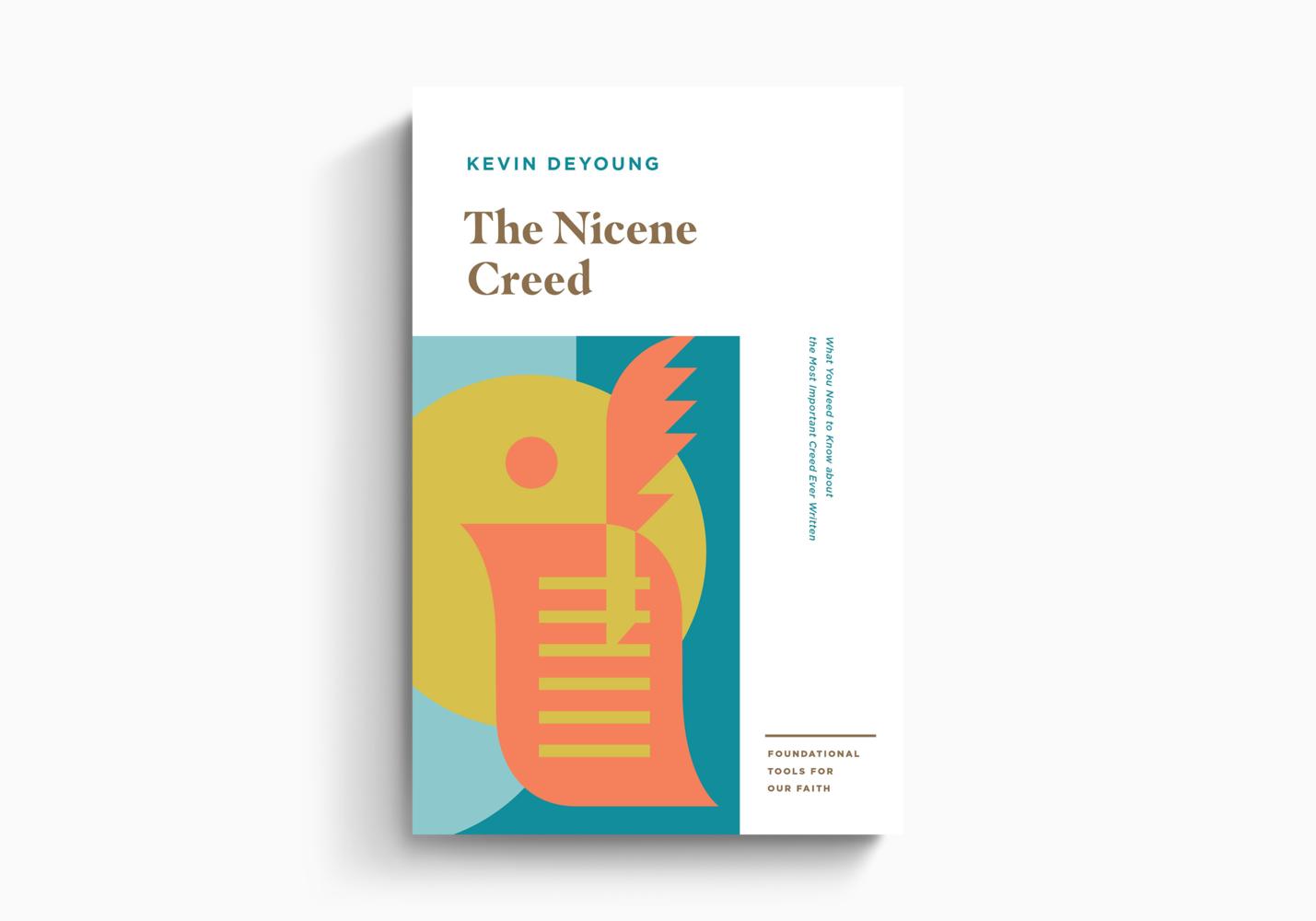
The Nicene Creed: What You Need to Know about the Most Important Creed Ever Written, by Kevin DeYoung. Crossway, 2025. Paperback, 96 pages, $12.99. Reviewed by OP member Katharine Olinger.
The Nicene Creed, by Kevin DeYoung, is the latest book in Crossway’s Foundational Tools for Our Faith series. First drafted in AD 325, the Nicene Creed has expressed the church’s Trinitarian theology for seventeen-hundred years. By reintroducing readers to the church’s earliest ecumenical council and its far-reaching creed, DeYoung helps us understand the doctrine it defends and the heresy it combats so we can continue to benefit from it today.
DeYoung’s book reminds me of a great scene from the Peanuts comic strip. On a stormy day, Lucy worries that the rain might never end, but Linus recalls God’s covenant promise to Noah in Genesis 9. Lucy is relieved and says, “You’ve taken a great load off my mind,” to which Linus responds, “Sound theology has a way of doing that.” The Nicene Creed does this, too.
DeYoung begins with history. The Council of Nicaea, called by Constantine the Great, addressed a theological crisis shaking the Roman world. Arius argued that “the Unbegun made the Son. . . . Thus there is a Triad, not equal in glories” (19). In response, Alexander defended the divinity of Christ—revealed in passages like John 1:1–3, but not yet clearly defined in theological terms. According to DeYoung, most bishops stood somewhere in the middle, hoping to be convinced of the truth. The Nicene Creed as we know it (with its expanded emphasis on the Holy Spirit) wasn’t confirmed until the Council of Constantinople in AD 381.
DeYoung divides the Nicene Creed into twelve articles and examines each with historical and theological insight. Throughout, DeYoung is intent on showing that “doctrinal precision does not get in the way of authentic discipleship” (83).
As a middle school teacher, I see this book supplementing a broad study of church history. The Nicene Creed can serve as a blueprint for understanding later creeds, the development of ecumenicity, and church-state relations. There are even tie-ins to modern Presbyterian conflicts over doctrinal precision and confessional integrity. While some sought to keep the Nicene Creed general, Alexander’s side “wanted language that no Arian could honorably submit to” at the council (21). DeYoung points out that relational unity in the church is the fruit of theological and spiritual unity. Then and now, it matters not only what we confess—but how we hold what we confess. Most importantly, the Nicene Creed attests that the subject, focus, and aim of church history should be the worship and glory of our triune God.
DeYoung shines a helpful light on a well-trod text. Recommitting ourselves to the words of “the most influential, most ecumenical, and arguably most widely used statement of faith in the history of the church” is a worthy and timely task (9). As DeYoung observes, “the Nicene Creed is a creedal floor, not a creedal ceiling,” and our world will continue to need “new efforts to delineate truth from error” (83).
September 13, 2026
September 06, 2026
August 30, 2026
John Calvin’s Illustrated Institutes, Book 1
August 23, 2026
August 16, 2026
August 09, 2026
August 02, 2026
© 2026 The Orthodox Presbyterian Church


