
Ministries
Resources
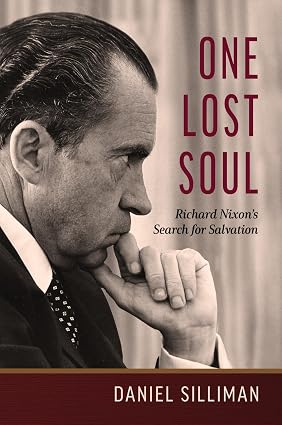
Daniel Silliman
Reviewed by: Danny Olinger
One Lost Soul: Richard Nixon’s Search for Salvation, by Daniel Silliman. Eerdmans, 2024. Hardcover, 336 pages, $36.99. Reviewed by New Horizons editor Danny Olinger.
In his religious biography of Richard Nixon, One Lost Soul, Daniel Silliman maintains that Nixon was a lost soul searching for the love of God. According to Silliman, this quest to be loved by God influenced everything that Nixon did, but it was accompanied by Nixon’s belief that he could never figure out how.
Raised in a Quaker home, Nixon attended multiple services a week in his youth. However, he was not baptized nor partook of the Lord’s Supper as the local Quaker congregation in Whittier, California, did not believe in practicing either. At Whittier College, Nixon was exposed to the teaching of liberal theology and embraced it. He dispensed with the infallibility and literal correctness of the Bible and with miracles. Jesus was the greatest man ever known, an example for all to follow. This Jesus would not save you from your sins but would inspire you to work harder.
Silliman follows Nixon’s political career from Cold Warrior Christian in the 1940s to the Checker’s prayer in the 1950s and the religious issue of the 1960 presidential election. Perhaps the most interesting chapter is “The Church in the White House.” Unlike Dwight Eisenhower, who took up a pew in National Presbyterian Church and was baptized after his inauguration, Nixon determined to hold worship services in the East Room off the first floor of the White House. At the first service in 1969, Billy Graham preached and George Beverly Shea led the singing. From that point forward, Nixon planned the services, always making sure to tell the preachers in advance that he couldn’t stomach sermons that singled him out. Among those who preached in addition to Graham were Westminster Seminary graduate Harold Ockenga, Leighton Ford, L. Nelson Bell, Harold Lindsell, and Norman Vincent Peale. Invitations to the service became a political tool, Nixon even informing his staff to select the Sunday congregation based on their views on an issue. Other times in order to counter political perspective on an issue, individuals such as Oregon Republican Mark Hatfield (who addressed the 1965 OPC General Assembly in Portland), were invited.
In the aftermath of the Watergate scandal and Nixon’s resignation, Silliman writes that Nixon thought of himself like Job, an innocent man being tested. But, of course, Nixon wasn’t like Job who confesses, “I know that my redeemer lives.”
In retirement, Nixon confessed that the only time he was ever in church was for weddings and funerals. For his memoir, In the Arena, he re-examined his religious beliefs from his college days. As a student, he believed in Jesus with all the miracles shaved off. He also stated that he believed in the resurrection, but only symbolically. But most importantly, he declared his belief that those who achieve the highest values in this life are those who may gain immortality. He wrote, “I adhere to these same beliefs today” (289). Silliman notes that it was Nixon’s final public statement on Christianity.
September 20, 2026
Track: A Student’s Guide to Church
September 13, 2026
September 06, 2026
August 30, 2026
John Calvin’s Illustrated Institutes, Book 1
August 23, 2026
August 16, 2026
August 09, 2026
© 2026 The Orthodox Presbyterian Church


