
Ministries
Resources
L. Michael Morales
Reviewed by: Jonathan J. Bartlett
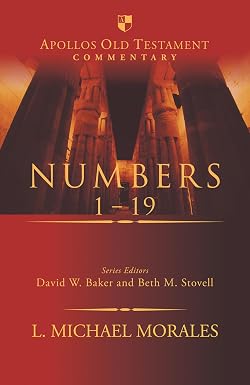
Numbers 1–19, by L. Michael Morales. Apollos, 2024. Hardback, 528 pages, $53.99. Reviewed by OP pastor Jonathan J. Bartlett.
The book of Numbers is undoubtedly one of the more challenging portions of the Bible. L. Michael Morales’s 2015 book, Who Shall Ascend the Mountain of the Lord? masterfully unstuck Bible readers from their journey through Leviticus, and Morales now likewise unsticks readers from the wilderness of Numbers. The apparent disorder that greets the superficial reader opens the way to a profound unity and a powerful gospel message. Morales ably guides the reader to rich spiritual treasures in this Old Testament handbook on ecclesiology.
Morales argues persuasively that Numbers is not merely about preparations for departure or God’s testing in the wilderness, but it is the “flowering of YHWH’s engagement with Israel at Sinai” (13). He writes, “Numbers is chiefly an analysis of Israel as the covenant community formed at Sinai, structurally expressed as the camp of Israel,” and Israel’s second generation “serves as a paradigm for God’s people in every generation” (2). The camp of Israel is a historical fulfillment of God’s covenant promise to dwell with his people.
Having established that premise, the entire book begins to unfold. Key passages such as the law of restitution, the law for the strayed woman, and the law of the Nazirite vow find their place as exemplary laws to maintain the purity of the camp in relation to one’s neighbors, one’s family, and one’s God (47). The three-tiered structure of the camp reflects the camp’s ideal leadership, especially Moses’s office as prophet, Aaron’s office of priesthood, and YHWH’s office of kingship (42). Comparisons to Ezekiel and Revelation confirm Morales’s findings, as both prophets draw heavily on camp imagery to portray Christ’s church. It is in the camp of Israel in the wilderness that Israel learned how to live as the covenant people of God; thus, the camp forms a pattern for the church today as we travel through the wilderness of this world.
The commentary begins with a lengthy introduction (seventy-four pages) followed by repeated sections of translation, notes on the text, notes on form and structure, commentary, and explanation. Multiple charts and illustrations clarify the design of the camp and important parallels through the text. Potential buyers should note that volume 1 covers only Numbers chapters 1–19, and that this first volume doesn’t contain a bibliography or indexes. It would be best to purchase volumes 1 and 2 together to maximize the usefulness of each. Both volumes are available in Logos as well as in hardcover.
One strength of Morales’s commentary is its abundant connections to Christ and the New Testament. Morales unashamedly points the reader from the text to Christ. This is a welcome approach considering how some commentaries remain too narrowly confined to the Old Testament context. I found myself praising God for the knowledge I was gaining. Israel’s God is our God: the same yesterday, today, and forever! Another strength of the book is Morales’s interaction with Jewish scholarship. This is new territory for many of us. Morales utilizes Jewish scholarship to corroborate his findings, as well as to raise intriguing possibilities, such as connections between the design of Israel’s camp and the signs of the zodiac (23).
While one endorsement calls the book a “page-turner,” the average reader will find the commentary dense reading. Anyone familiar with Morales’s earlier works, Who Shall Ascend? and Exodus Old and New, will recognize that this commentary is on another level. The book is best suited for pastors who are preaching through the book of Numbers and for biblical scholars looking for a comprehensive evangelical commentary. That said, the lengthy introduction is quite accessible to most Christian readers and worth the price of the book.
This book will be the primary modern evangelical commentary on Numbers for a long time to come. Morales has paved new ground while remaining rooted in historic orthodoxy. The church owes a debt of gratitude to Morales for advancing our understanding and appreciation of God’s Word. May God use this commentary to increase our faith and love as we hide its truth in our hearts and practice it in our lives.
November 01, 2026
October 18, 2026
October 11, 2026
October 04, 2026
September 27, 2026
September 20, 2026
Track: A Student’s Guide to Church
September 13, 2026
© 2026 The Orthodox Presbyterian Church


