
Ministries
Resources
Danny E. Olinger
Reviewed by: Peter Y. Lee
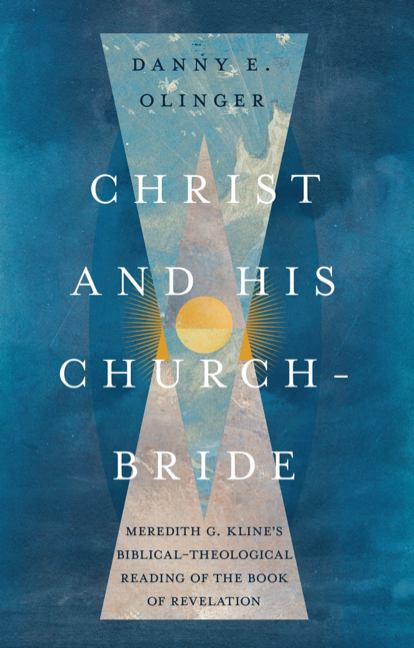
Christ and His Church-Bride: Meredith G. Kline’s Biblical-Theological Reading of the Book of Revelation, by Danny E. Olinger. Reformed Forum, 2025. Hardcover, 554 pages, $49.99. Reviewed by OP minister and professor Peter Y. Lee.
Those who have had the pleasure of studying with Dr. Meredith G. Kline know that his lectures and writings were saturated with references to the book of Revelation. This may seem unexpected since his academic career was focused primarily on the Old Testament. However, he had an impassioned joy as he reflected on the glorious blessings that the church receives through the consummated Christ. Revelation exemplifies this concept with remarkable clarity. Accordingly, a comprehensive understanding of Dr. Kline’s biblical theology requires consideration not only of Christ as depicted in the New Testament, but specifically the glorified Christ as presented in Revelation. Danny E. Olinger has demonstrated this point in his tour de force, Christ and His Church-Bride: Meredith G. Kline’s Biblical-Theological Reading of the Book of Revelation, providing a creative and innovative analysis of Kline’s rich biblical theology of this New Testament apocalypse. The four sections of the book organize Kline’s view from an academic, ecclesiastical, exegetical, and encyclopedic perspective.
In the first section, Olinger summarizes Kline’s view on Revelation from several of his published works. Readers familiar with Kline will recognize this portion as a concise review of his analysis of redemptive history as viewed through its consummated conclusion. Of the numerous observations Olinger makes, a significant one was Kline’s view on the image of God. In several places, Olinger shows that Kline saw the consummated church as renewed in the glory-image of her Redeemer. Contemporary theological discourse frequently reflects on the image of God, and Kline’s work offers a noteworthy, albeit undervalued, contribution to this ongoing conversation. These recent discussions on image center around a unity-diversity theme, meaning that as God is both a unity (one God) in diversity (three persons) so we see a unity-diversity in humanity (one humanity, yet two genders, multiple races, etc.). Kline, however, focused on the glorified image. There is much to gain from the unity-diversity view, but this applies to the reprobate as well as the elect. In other words, this is a common grace analysis of image. Kline, in contrast, concentrated on the one aspect of image that is exclusively a blessing for the elect, thus redemptive and Christ-centered.
While the first section effectively highlights Kline’s academic expertise on Revelation, the second section of the book, which provides an opportunity to review Kline’s sermons, is even more exciting. This is because these sermons provide a small glimpse into an aspect of Kline’s ministry that students rarely experienced, namely Kline the Preacher. What became evident upon reading was the pastoral care and regard he had for the spiritual well-being of God’s people. While Kline’s principal focus was to highlight the glory of Christ, he also sought to encourage the church by proclaiming the benefits they may experience through their union with Christ, both in his sufferings and in his glory. It was this insight that led Olinger to the title of this book, using Klinean hyphenations—Christ and His Church-Bride.
These sermons show Kline’s conviction that an amillennial eschatology most consistently and accurately depicts the riches of redemptive blessings. Yet, his critique of rival eschatological views (dispensational premillennialism and theonomic postmillennialism) was not merely for academic reasons. He saw Christ most glorified in an eschatological pattern of a long church era, followed by a final crisis, that led to the eternal state. His sermons demonstrate this conviction.
Kline’s sermons also demonstrate that Revelation provides opportunities to preach on all occasions—Lord’s Supper services, Easter Sunday, even Christmas—and to emphasize various subjects, like religious intolerance, missions, and prayer. His sermons show a pastoral sensitivity, and he communicated the Word knowing that he was proclaiming to the laity, not to seminary students. Yet, the content of his materials was like those from his courses. He did not withhold from God’s people the riches of the Word, but rather, he expressed them so that they were accessible to all peoples. Since many only know Dr. Kline as a seminary professor, one almost would anticipate his sermons to be filled with technical jargon that are too cerebral for the layperson to appreciate. That was not the case. He preached the Word with Christ-centered devotion and with clarity, cohesion, and concision. In that regard, Kline the Scholar was not too different than Kline the Preacher. Indeed, these sermons were reminiscent of the Grace and Glory volumes of Geerhardus Vos.
In the third section of the book, Olinger reconstructs a Klinean commentary on Revelation based on previously published works and sermons. In doing so, Olinger shows how Kline begins in the Old Testament, but always ends in the New, specifically in Revelation. Exegetically and theologically, Kline argues persuasively for the following: 1) the recapitulation hermeneutic is the most reliable approach to understanding this book; 2) the life of the church follows the model of her Redeemer—suffering then glory; 3) Revelation depicts the pattern of the last days in three successive eras: long period of the ministry of the church (i.e., the millennium), followed by a brief Har-Magedon final crisis, where Satan and the wicked nations that followed his rebellion are condemned, which then leads to the consummation of creation and the revelation of Christ as the king in a glorified, consummated kingdom.
The final section of the book provides an “anthology” of theological terms associated with Kline’s teachings on Revelation. It is a systematic reorganization, listing and defining various Revelation themes from Kline’s view. This final section will be helpful for those who desire to know more about Kline’s comments on these specific themes.
As a student of Kline, it is gratifying to see his biblical theology increase in recognition. Several of his former students have contributed to popularizing his teachings through sermons, podcasts, and other forms of publications. At an Evangelical Theological Society meeting in 2022, I was pleasantly surprised to hear Kline’s works positively referenced in several presentations. In addition to this is the work of John Muether in the recently established Kline archives—a treasure chest of theological resources. Danny Olinger’s book contributes to this growing appreciation for Dr. Kline, arguably the most significant Reformed Old Testament scholar of the latter half of the twentieth century. Olinger is to be commended for the thorough work he has done, thus providing an important resource for anyone who desires to preach, teach, or publish about the book of Revelation. He has also demonstrated that a true biblical theology presses readers of Scripture forward, always towards its eschatological goal of the glorified Christ with his church-bride in eternal glory. This is the message of Revelation; this was the heart passion of Dr. Kline. I have no doubt that this work would have pleased this faithful man who spent his entire life in service to Christ and desired to see nothing more than Christ’s name exalted to the highest place.
November 01, 2026
October 18, 2026
October 11, 2026
October 04, 2026
September 27, 2026
September 20, 2026
Track: A Student’s Guide to Church
September 13, 2026
© 2026 The Orthodox Presbyterian Church


