
Ministries
Resources
Jonathan Gibson
Reviewed by: Zachary R. Keele
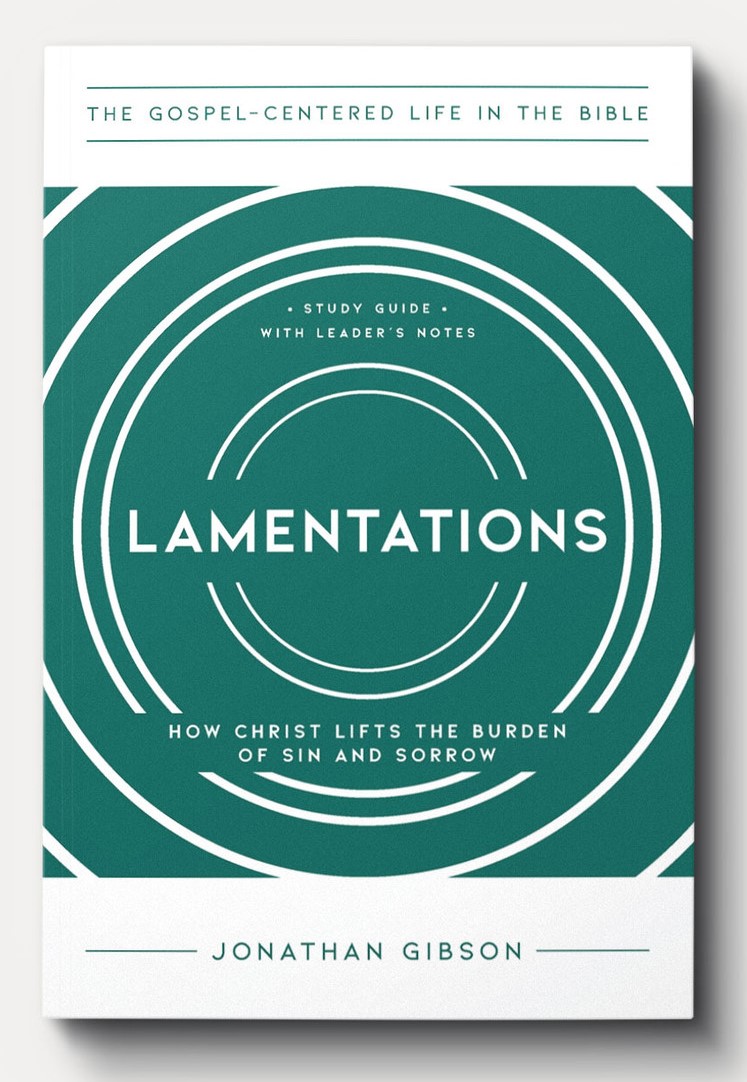
Lamentations: How Christ Lifts the Burden of Sin and Sorrow, by Jonathan Gibson. New Growth, 2025. Paperback, 80 pages, $16.99. Reviewed by OP pastor Zachary R. Keele.
Unpleasant but necessary, like medicine or a dentist visit, so is lamenting. Mourning tragedies and evils fall under a spiritual discipline, and the new book by Jonathan Gibson aims to provide growth in this arena. Lamentations: How Christ Lifts the Burden of Sin and Sorrow is a Bible study through the book of Lamentations. In this terse and handy volume, Dr. Gibson leads us through Lamentations by six lessons. In the introduction, he sets forth the historical context for the book. Lesson 1 aptly shows the purpose and reason for the book by linking in 2 Kings and Deuteronomy. Lessons 2–6 walk through the five chapters of Lamentations. Each lesson follows the same sixfold pattern (4–5). The lessons are designed to take about an hour, and each segment has a minute guide. The study group is to read the Scripture passage aloud and then discuss its ideas and their reaction to the text. In the exercises, Dr. Gibson encourages individuals in the group to write out personal laments, prayers, and self-assessments. In a final chapter, he supplies advice for the leader to help them with the study. Thus, this book is a ready-made small-group Bible study that is easy to use.
In addition to its excellent accessibility, the refined gold of this volume is that Dr. Gibson gets the main message of Lamentations correct. He reiterates that Jerusalem’s suffering was not the unknown troubles of Job, but they were punished for their sin, for breaking God’s covenant. The terrors of the Lord’s wrath on Jerusalem signaled the ultimate curse for sin, which chiefly points us to Christ and his death upon the cross. As he writes, “Jerusalem’s hellish experience . . . was Jesus’s hell experience” (34). In every lesson, the author points us to how Jesus suffered and lamented for our sin. He teaches us to lament by showing Christ’s lamentation for us and with us. This superb truth makes the whole study gospel-centered with a gospel tone.
The other stand out strength of this study is that the author instructs us on how to lament. Since lamenting is not a widespread virtue, he helps us to grow in the wisdom of lamentation. Dr. Gibson does this by teaching us about biblical lamentation and encouraging us to practice lamenting (even by writing them out). Dr. Gibson naturally and capably demonstrates how the gospel foundation shapes our lived-out faith.
Two quibbles, though, are worth mentioning. One, the writing style suffers a bit from the hyperbolic style of the internet; he uses always, all, and never too frequently and often in places that are far from convincing. The second is more of an unintended consequence. In each lesson, you read the chapter of Lamentations and are told to discuss your response to it. Yet, the author provides little to no commentary on the text. This comes across as a reader-response technique. Surely the author did not intend this, but it seems unavoidable at some point. Gibson admits that Lamentations is a challenging book, but the group is told to respond to its difficulties, without exegetical help. A few more textual notes would strengthen this study. Notwithstanding these quibbles, this book would make a fine Bible study, and it would be easy to implement in your congregation.
September 27, 2026
September 20, 2026
Track: A Student’s Guide to Church
September 13, 2026
September 06, 2026
August 30, 2026
John Calvin’s Illustrated Institutes, Book 1
August 23, 2026
August 16, 2026
© 2026 The Orthodox Presbyterian Church


